Ningbo Bohua Mechanical Parts Co., Ltd. · Linda, Export Sales · linda@ningbobohua.com · www.bohua-casting.com
Engineering guide
PPAP Level 3 for Aluminum Castings: Evidence Planning
Plan a PPAP Level 3 submission around the customer requirements, controlled drawing, production route, samples, and supporting evidence. Bohua supports PPAP up to Level 5. Agree what must be submitted, retained, and approved before scheduling the package; a submission level is not a separate product certification.
On this page
- Agree the submission scope before preparing the package
- Send approval requirements with the RFQ
- Map each requirement to a record and a responsible role
- Link casting evidence to the actual production route
- Track the records needed for customer approval
- Request a defined package, not a fixed document count
Agree the submission scope before preparing the package
A PPAP Level 3 request needs an agreed submission scope, customer requirements, and a controlled drawing revision. Plan the Part Submission Warrant, samples, and supporting evidence against those requirements before committing to an approval schedule.
The submission level defines how evidence is presented or made available. It is not a casting quality grade or a separate supplier certification. Use the customer's applicable PPAP requirements to decide what is submitted, retained, applicable or subject to an approved exception.
At Bohua
- PPAP support is available up to Level 5.
- Bohua's IATF 16949:2016 certificate is issued by NQA and is valid through November 20, 2027.
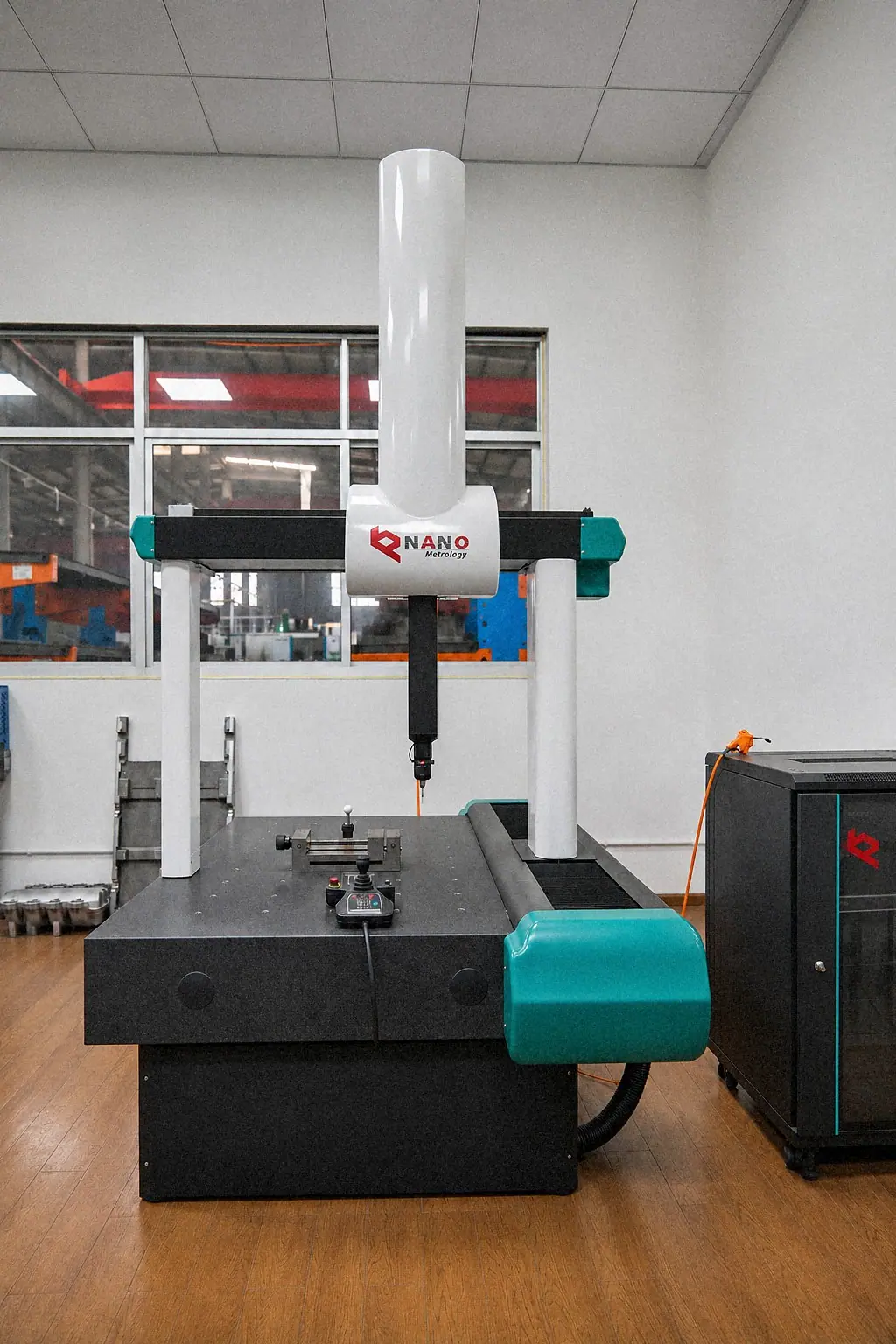
- Dimensional inspection equipment includes Hexagon Global S and NANO Metrology CMMs.
- Material analysis equipment includes an Oxford optical emission spectrometer.
- T5/T6 heat treatment is performed in-house.
These facts establish available capabilities. The customer still defines the evidence and approves the part-specific submission. Review Bohua's quality certification information separately from the project approval package.
Planning reference: AIAG Production Part Approval Process, 4th Edition, 2nd Printing. Use the authorized manual and the customer's applicable instructions for the actual submission.
Send approval requirements with the RFQ
Identify the submission reason, required level, controlled revision, and customer-specific requirements before the manufacturing route is agreed.
- Provide the current design record and authorized changes.
- Mark special characteristics and identify the applicable acceptance requirements.
- State alloy, temper, material-record requirements, and traceability scope.
- Define sample quantity, production-run requirements, intended production conditions, and the requested approval window.
- Identify required dimensional, material, functional, and process-study evidence.
- Provide customer forms, submission instructions, record-retention rules, and the approving role.
- Separate records prepared by the casting supplier, subcontractors, and the buyer.
For a suspension bracket, start with the component inputs in the automotive suspension bracket RFQ requirements. Submission scope remains specific to the released drawing and customer requirements.
Map each requirement to a record and a responsible role
The supplier and buyer should map every applicable requirement to its record, revision, owner and disposition.
| Review area | Evidence to define | Responsibility to agree |
|---|---|---|
| Design and changes | Controlled design record, authorized changes, design responsibility, and required engineering approvals. | Buyer releases requirements; the responsible design owner supplies applicable design evidence. |
| Process and risk controls | Process flow, applicable design risk analysis, process risk analysis, control plan, and reaction plan. | Assign each document to its responsible organization. Include outsourced operations. |
| Measurement and dimensions | Measurement-system studies, dimensional results, drawing characteristic references, and checking-aid records. | Supplier prepares the agreed evidence; buyer resolves acceptance-method questions. |
| Material and performance | Material analyses, specified treatment records, performance results, and required laboratory documentation. | Identify the test provider, specimen source, lot linkage, and approval responsibility. |
| Initial process evidence | Required studies for designated characteristics, data source, production conditions, and acceptance requirements. | Agree the study scope and review responsibility before collecting data. |
| Samples and other applicable records | Sample products, master-sample arrangements, appearance records where required, and customer-specific evidence. | Agree who supplies, retains, or reviews each item. |
| Submission and disposition | Part Submission Warrant, submitted-versus-retained record list, open-item register, and approval disposition. | Identify the supplier signatory and customer approving representative. |
Use this matrix to group review areas, then check each element against the authorized manual and customer instructions. Record which requirements apply to your part and any approved exceptions.
Link casting evidence to the actual production route
Keep the design record and authorized changes consistent across tooling, process planning, measurement and submission.
Map material receipt, casting, specified treatment, machining, finishing, inspection, and shipment in the process flow. Connect identified risks to controls and reactions. Include the required records for any outsourced operation.
The gravity casting manufacturing scope provides the process context. Use that context to prepare the flow and control plan for your drawing and agreed production route.
Material and performance records should identify specimen origin, lot linkage, test method, and acceptance source. Keep component tests distinct from test-bar results and complete-system validation.

Map each required characteristic to its measurement evidence and check the applicable measurement-system requirements. Define the datum scheme, inspection condition, and any alternative methods using the CMM dimensional report requirements.
At Bohua
For material-test planning in a PPAP package, Bohua has a WDW-100E tensile testing machine.
Impact-test resources include a JB-300B machine at the plant.
Bohua’s hardness-test resources comprise an HBE-3000A and a digital Brinell hardness tester.
The melt-release sequence requires acceptable vacuum hydrogen and spectrometric results before pouring.
Map the tests required by your customer to the applicable records, lot and specimen basis; equipment availability does not define the Level 3 submission list. The melt-release process provides context for the material-control discussion.
Track the records needed for customer approval
Use a requirement register to distinguish evidence that exists from evidence still needed for approval.
| Field | What to enter |
|---|---|
| Requirement source | Applicable manual or customer requirement and revision. |
| Record and owner | Document title, revision, responsible organization, and responsible role. |
| Part and process linkage | Design revision, sample or production lot, and relevant manufacturing condition. |
| Submission instruction | Submit, retain, or make available as directed by the applicable requirement. |
| Status and disposition | Evidence complete, action open, applicability decision, or approved exception with its reference. |
| Release authority | Customer disposition, any authorized limits, and the role controlling shipment release. |
The package should distinguish a proposed deviation from an approved change. Record the customer's approval before applying a proposed change to a drawing requirement.
Sample delivery alone does not authorize production shipment. Resolve open items or obtain the customer's applicable interim disposition before the relevant release. Follow the customer's change-notification and resubmission rules when the approved product or process changes.
Request a defined package, not a fixed document count
Send the controlled drawing, required level, submission reason, customer instructions, quantities, and approval timing through the aluminum casting quotation request.
Identify which records must be submitted and which must be retained. Include subcontractor evidence requirements and customer-supplied forms. This lets the documentation and validation scope be reviewed with the manufacturing scope.
Send your drawing and PPAP submission requirements
Submit the RFQ details, then email your drawing for a structured quote review. Not sure which process fits? Tell us what the part must do. In a free drawing review, our engineers recommend a process and suggest design changes where needed.
Send your drawing →