Ningbo Bohua Mechanical Parts Co., Ltd. · Linda, Export Sales · linda@ningbobohua.com · www.bohua-casting.com
Overview
Aluminum Casting Alloys
Bohua uses A356 and ZL114 for gravity and tilt-pour casting, with T5/T6 heat treatment in-house. Use this material index to connect your drawing designation, delivery condition and inspection requirements. For die casting, the alloy follows the customer's specification, and ADC12 is a common choice.
Materials available at Bohua
Bohua uses A356 and ZL114 for gravity and tilt-pour casting. Start with the material specified on your drawing, then define its delivery condition and acceptance requirements. For die casting, the alloy follows the customer's specification, and ADC12 is a common choice.
At Bohua
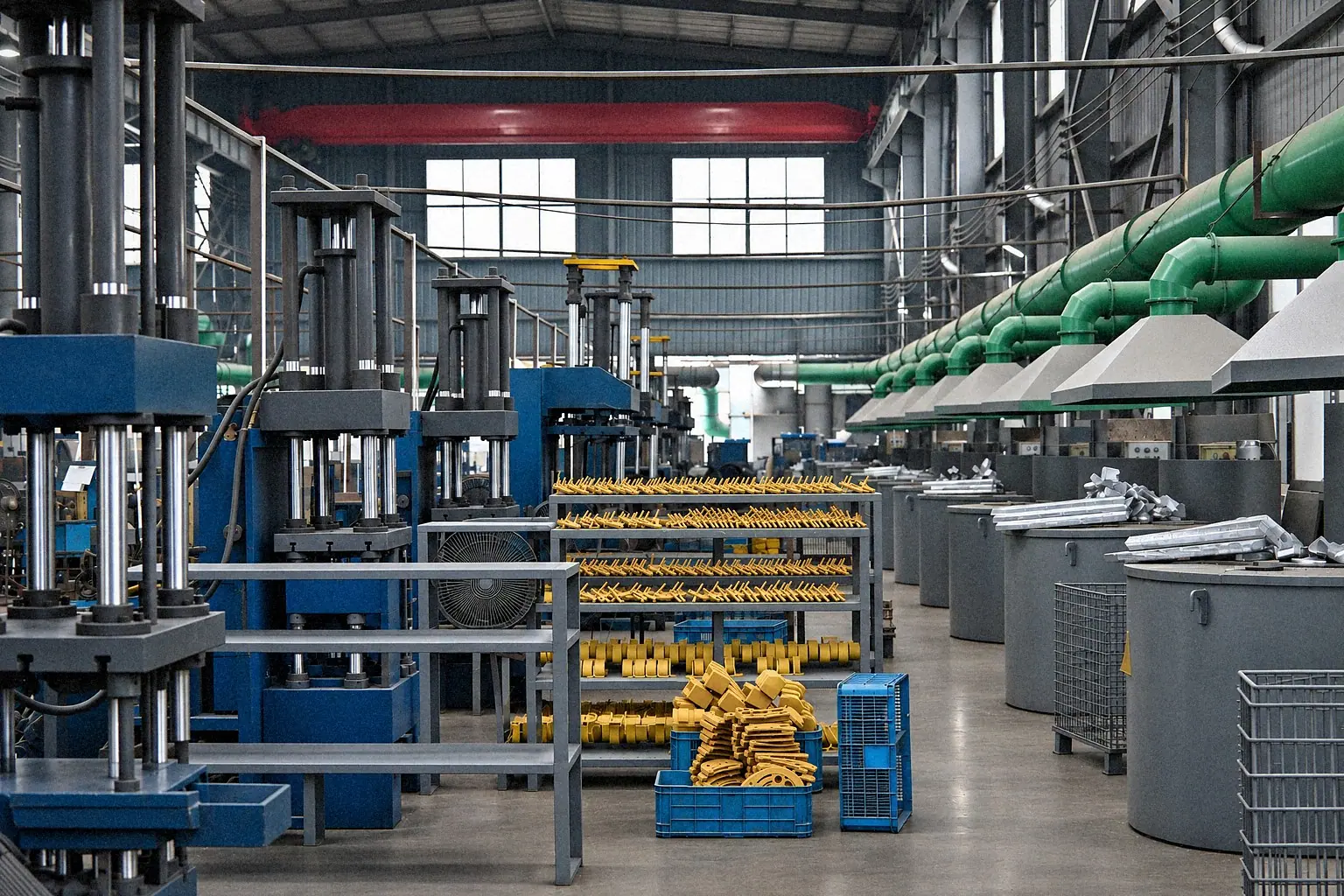
A356 and ZL114 are the confirmed materials for gravity and tilt-pour casting. T5/T6 heat treatment is performed in-house. The plant has 32 tilt-pour machines and 10 upright gravity casting machines.
Check proposed alloy equivalents before approval
Compare the complete specifications when alloy names look similar. Obtain design-authority approval before substituting a material.
| Drawing or proposal | Required comparison | Release condition |
|---|---|---|
| A356 and ZL114 | Full designations, controlled chemistry, delivery condition, casting route and test basis | Design-authority approval of any substitution |
| ZL114 and ZL114A | Exact suffix, governing standard and edition, and customer amendments | Resolve the drawing requirement before assigning a specification |
| ADC12 and another die-casting alloy | All controlled elements, required properties and finished-part validation | Obtain design-authority approval after comparing the full specifications and validation requirements |
Keep reference property values separate from acceptance limits. Record the specimen source, material condition and test method alongside any strength or elongation requirement. Do not transfer a value from a different alloy or heat-treatment condition.
Match material evidence to the delivered part
Chemical analysis, mechanical testing and finished-part inspection answer different questions.
At Bohua
The laboratory has an Oxford optical emission spectrometer and a WDW-100E tensile testing machine. Tell us which material properties you need to verify so we can review the test scope and required part records.

Specify the required material certificate, heat-treatment record and inspection results in the RFQ. Define the delivery state of machined features and any pressure boundary. See Bohua inspection equipment and quality control for the available inspection scope.
Send the drawing with the material requirement
A useful material inquiry includes the exact alloy callout and the evidence needed to accept the finished component.
- Current 2D drawing and 3D model, with the revision identified.
- Material specification and edition, customer amendments and required delivery condition.
- Critical dimensions, service conditions, machining scope and test requirements.
- Annual demand, release quantities, tooling status and approval milestones.
Use Bohua gravity casting capabilities to check the manufacturing route. For a fluid-path component, use the coolant water outlet drawing requirements. Send the complete material callout with your casting quotation request.
Send your drawing and material specification
Include the required alloy, delivery condition, annual demand and acceptance criteria. Not sure which process fits? Tell us what the part must do. In a free drawing review, our engineers recommend a process and suggest design changes where needed.
Send your drawing →