Ningbo Bohua Mechanical Parts Co., Ltd. · Linda, Export Sales · linda@ningbobohua.com · www.bohua-casting.com
Engineering guide
Aluminium Casting Finishing: Anodizing & Powder Coat
Choose a casting finish by the part's function, environment, assembly interfaces and appearance requirements. Anodizing, powder coating and liquid painting solve different problems. The alloy, casting surface, machining sequence and masking plan must be reviewed with the chosen finish before quoting a finished component.
On this page
Choose the Finish for the Service Conditions
| Finish | Buyer decision | What to approve before production |
|---|---|---|
| Anodizing | Functional protection, paint preparation or decorative appearance? | Alloy and process compatibility, representative casting sample, film requirements and masked interfaces |
| Powder coating | Which coating system, color, texture and environment apply? | Cleaning and pretreatment, cure conditions, coverage, adhesion evidence and specified film thickness |
| Liquid painting | Which primer and topcoat suit the service conditions? | Surface preparation, application and cure requirements, appearance and agreed performance tests |
Specify the finish system and acceptance requirements alongside your color choice. For a pressure-tight part, specify the functional test separately from the coating requirement to check whether internal porosity affects sealing.
At Bohua
Bohua works with A356 and ZL114 for gravity and tilt-pour casting. Mirror polishing is available. T5/T6 heat treatment is performed in-house. These capabilities help define the substrate and supplied state; each requested coating system needs its own scope and acceptance agreement.
Review the gravity casting manufacturing scope alongside the finish specification. State the owner of each finishing operation in the quotation.
Approve Anodizing on a Representative Casting
Cast aluminum can be anodized, but the alloy and surface condition affect the result. Silicon-rich areas can respond differently from the aluminum matrix and produce a dark or uneven appearance. The Aluminum Anodizers Council advises checking casting-alloy suitability with an anodizing specialist.
Give the finisher the exact alloy, casting route and delivered surface condition. Include both machined and as-cast areas in the sample review. Approve appearance on a representative casting sample; keep any anodized-extrusion photograph as a visual reference only.
Agree the visible faces, color variation, gloss or texture, viewing conditions and approved master sample. Record the anodizing specification and edition, film requirement, measurement locations and masking boundaries. Mechanical preparation remains part of the appearance decision because anodizing can reveal the underlying texture.
Source: Aluminum Anodizers Council, Specifying Anodized Aluminum, casting alloys and mechanical finish.
Define Preparation, Application and Cure
Powder coating and liquid painting need a specified coating system and preparation route. Ask who performs cleaning, pretreatment, application and cure. Use the selected system's technical data and the buyer's service requirements to agree the process.
Evaluate representative castings for surface openings, trapped contamination, coverage and appearance. Agree any permitted preparation or repair before coating. Include recesses, edges and areas next to masks in the sample inspection.
For liquid painting, identify the primer and topcoat combination. For powder coating, identify the powder system and texture. For either route, record the film-thickness requirement and measurement method, adhesion test, corrosion test if required, and cosmetic acceptance conditions. Include these criteria with the coating name in your RFQ.

Use surface cleaning as one step in the preparation route you specify. Approve the coating system and its performance requirements for your part alongside that preparation route.
Set the Machining and Masking Sequence
Mark every bearing bore, thread, electrical contact, sealing land and datum that must remain uncoated. State whether final sizes are inspected before or after finishing. Coating on a functional interface can change the fit; removing it later can damage the finish at the boundary.
- Identify the final surfaces. Mark visible faces, functional interfaces, as-cast areas and machined areas on the same revision-controlled drawing.
- Agree preparation. Specify deburring, cleaning, blasting or polishing where needed. Define edge conditions and protected areas.
- Locate masks. Show mask boundaries, threaded holes, bores, seal faces, electrical contacts and permitted coating transitions.
- Approve the sequence. State when heat treatment, machining, coating and final inspection occur. Assign responsibility for dimensional effects.
- Protect accepted surfaces. Agree cleaning, handling, packing contact points and protection for visible faces and sealing lands.
At Bohua
Bohua's machining equipment includes 16 vertical machining centers, 2 CNC engraving and milling machines, 22 CNC lathes and 2 large lathes. Define the final coating state when specifying a machined interface.
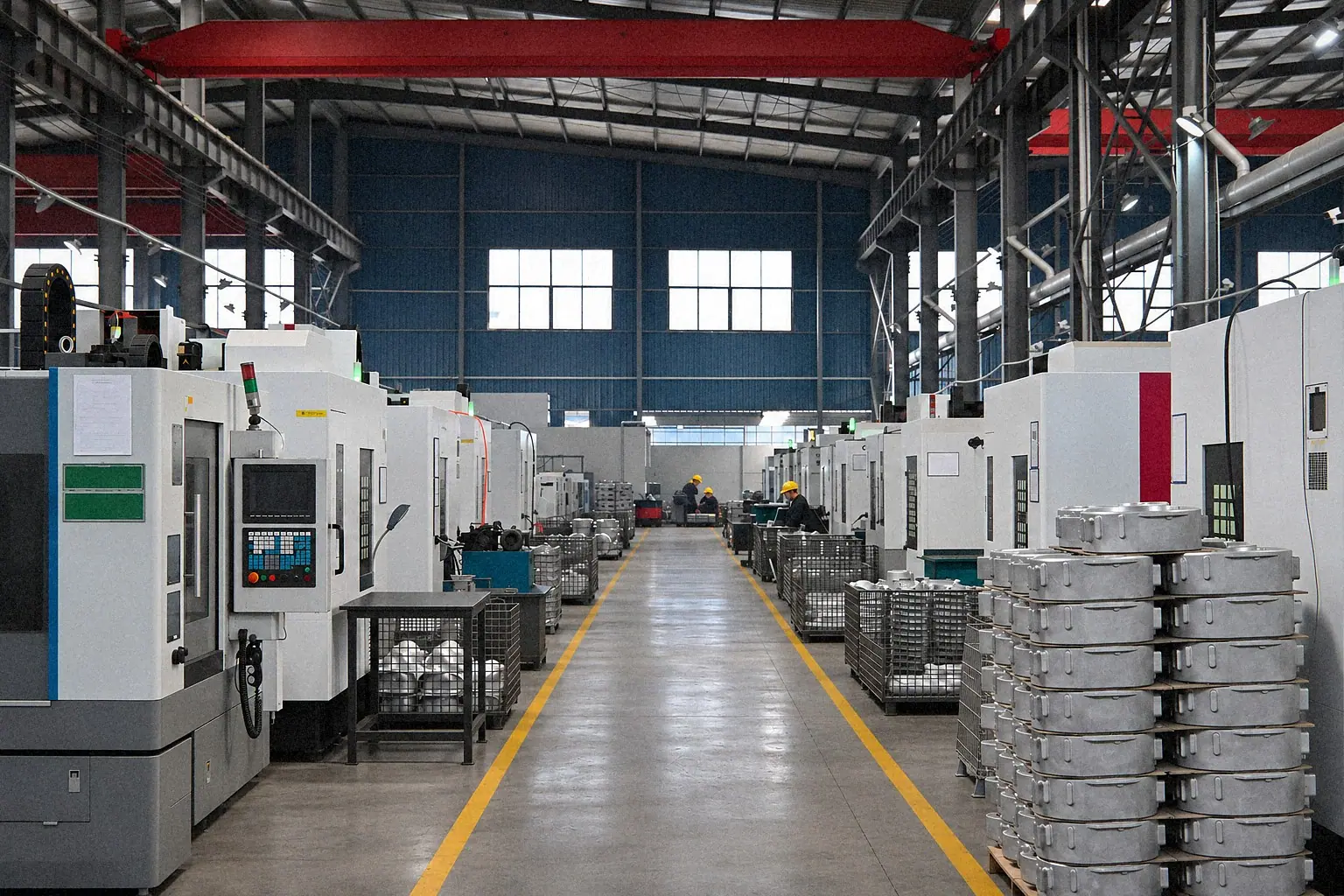
Use the casting and CNC machining scope to describe the supplied component. Record texture limits and measurement conditions through the surface roughness specification guide.
At Bohua
Bohua permits impregnation only with customer consent and uses a qualified outside provider for the operation.
State any permitted impregnation stage in the finishing route before approving surface preparation or coating.
Agree the Finishing Acceptance Record
Approve the coating requirement, sample and inspection plan before production release. Use the schedule below to define your inputs, then request the agreed inspection results for your part.
| Controlled item | Input to define | Evidence to request |
|---|---|---|
| Substrate and state | Alloy, casting route, heat treatment and preparation | Drawing revision and supplied-condition record |
| Film thickness (µm, if specified) | Limits, locations and measurement method | Results at the agreed locations |
| Appearance | Master sample, visible zones, color, texture and viewing conditions | Sample approval and inspection result |
| Masking and dimensions | Uncoated areas, boundary allowance and final-state dimensions | Marked drawing and final inspection record |
| Adhesion and corrosion | Test method and edition, exposure conditions, sampling and acceptance | Agreed test report for the specified system |
| Repair and packaging | Permitted touch-up, deviation approval and surface protection | Repair disposition and packing agreement |
For a coolant outlet, identify the external coated areas separately from the uncoated sealing interface. Use the coolant water outlet drawing inputs for that application. Apply this specification example to your drawing when defining the finishing scope.
At Bohua
Bohua has a YWX-750 salt-spray chamber available for a finishing acceptance discussion.
Specify the exposure method, duration and acceptance criteria with the coating requirement before requesting a test result.
Send a Finish-Ready Drawing Package
Send the alloy, drawing and model revisions, service environment, finish specification and edition, masking map, appearance sample, inspection requirements and annual volume. Require the quotation to identify which operations are performed in-house and which are subcontracted.
Use the aluminum casting RFQ checklist to keep the supplied-part scope consistent. Submit the marked drawing package through the finishing RFQ route.
At Bohua
For pressure-tight castings, Bohua’s leak-testing method is air-under-water immersion at 3 bar or more.
Define the required test stage and acceptance separately from coating appearance in the leak-test specification.
Send your drawing and finishing requirements
Submit the RFQ details, then email your drawing for a structured quote review. Not sure which process fits? Tell us what the part must do. In a free drawing review, our engineers recommend a process and suggest design changes where needed.
Send your drawing →