Ningbo Bohua Mechanical Parts Co., Ltd. · Linda, Export Sales · linda@ningbobohua.com · www.bohua-casting.com
Engineering guide
How to Compare Aluminum Casting Quotes: A Buyer-Side Quote Sheet
Compare aluminum casting quotes only after every supplier is mapped to the same drawing revision, material condition, process route, delivered condition, annual volume, inspection package, packaging, and delivery basis. The sheet below keeps included scope, exclusions, evidence, and unresolved assumptions visible without filling missing values with invented figures.
On this page
- Normalize scope before comparing quotations
- The buyer-side quote comparison sheet
- Record process, alloy, and delivered condition
- Separate tooling and ownership
- Split machining from inspection evidence
- Record packaging, delivery terms, and buyer-owned work
- Make exclusions and assumptions visible
- What Bohua needs for a comparable quotation
- Quote comparison questions
Normalize scope before comparing quotations
The lowest line item is not necessarily the lowest delivered program cost. One supplier may include CNC machining, leak testing, dimensional reports, and export packaging. Another may exclude machining fixtures, inspection records, or tooling maintenance. A third may propose a different casting process. The comparison sheet must expose those differences before procurement evaluates the commercial result.
Use one controlled RFQ package for every supplier. Keep a missing value blank or mark it unresolved, then ask the responsible supplier or buyer to provide the supporting figure.
If the RFQ is still being prepared, use the aluminum casting RFQ checklist. If drawings are controlled, the custom aluminum casting quotation guide explains how to submit the same assumptions for review.
Download the worksheet: Aluminum casting quote comparison sheet (CSV). Open it in Excel or Google Sheets. It lists each scope line, whether it is included, separate or open, and the recurring and one-time costs to compare.
The buyer-side quote comparison sheet
Use one row for each decision and one supplier column for each quotation. Add an evidence or owner column so every material assumption can be traced to a quotation, drawing, freight proposal, buyer decision, or unresolved action.
| Comparison field | Supplier A | Supplier B | Evidence, owner, or open question |
|---|---|---|---|
| Drawing and model revision | |||
| Casting process and reason | |||
| Alloy, temper, and material standard | |||
| Delivered condition | |||
| Annual volume and release pattern | |||
| Mold, cores, inserts, and ownership | |||
| Machining and inspection fixtures | |||
| Heat treatment | |||
| CNC machining scope | |||
| Inspection methods and coverage | |||
| Approval records | |||
| Surface finish and cleaning | |||
| Packaging and labeling | |||
| Incoterm and named place | |||
| Freight and import assumptions | |||
| Buyer-owned qualification and inventory | |||
| Exclusions and unresolved assumptions |
Match the delivered conditions before you rank suppliers. A raw casting, a heat-treated blank, and a machined, inspected, export-packed component are different scopes even when they share one drawing number.
Record process, alloy, and delivered condition
Name the process difference when comparing gravity-casting and die-casting quotes. Record the proposed route, alloy, temper, heat treatment, machining allowance, and why the supplier selected that route. If a quote says only “aluminum casting,” ask the supplier to specify these fields before award.
- Is the process fixed by the buyer or recommended by the supplier?
- Does the quotation follow the same drawing and model revision?
- Are alloy, temper, material standard, and mechanical requirements identical?
- Are heat treatment and material records included?
- Has machining stock already been considered in the casting model?
If suppliers recommend different routes, compare the engineering reasons in the casting process selection framework before comparing commercial terms.
Separate tooling and ownership
Tooling should be separated from recurring part scope. Record the mold, core boxes, inserts, machining fixtures, inspection fixtures, gauges, engineering deliverables, ownership, maintenance, storage, expected life, revisions, and transfer terms.
Bohua tooling scope to place in the sheet
Bohua designs and manufactures casting molds in-house. Most molds use GB 45 carbon steel; H13 is used for higher requirements. For A356 permanent molds, expected life is approximately 20,000–50,000 shots, subject to geometry, operating conditions, maintenance, and agreed end-of-life criteria. That range applies to GB 45 carbon-steel molds; H13 molds last about 100,000 shots with regular maintenance.
Tool design uses UG and SolidWorks, and casting simulation uses AnyCasting. The confirmed route from drawing confirmation to first article is 5–6 weeks.
If one supplier includes machining fixtures and another does not, the first quote may look higher but be more complete. If tooling ownership is unclear, the buyer may be locked into a supplier even after paying for the mold. The gravity die casting tooling scope guide lists the questions to resolve before release.
Split machining from inspection evidence
CNC machining and inspection are separate fields even when one supplier performs both. For machining, record datums, locating strategy, bores, sealing faces, grooves, ports, threads, surface requirements, deburring, cleaning, fixtures, and the boundary between rough and finished machining.
For inspection, record the method, coverage, sampling, acceptance criteria, report format, traceability, and approval package. Ask us to confirm which inspection methods are included for your part and record any optional work separately.
Bohua equipment and evidence
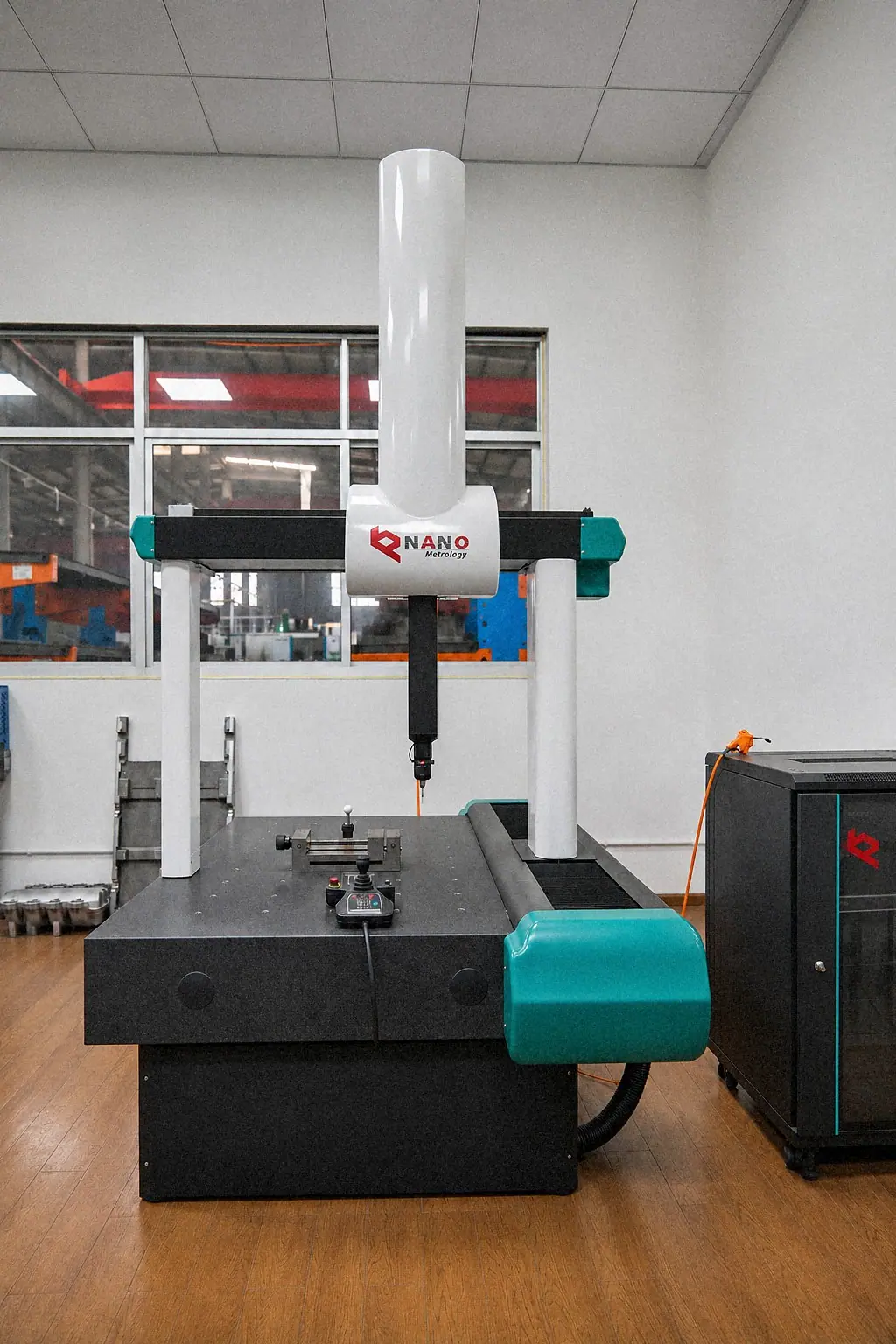
Bohua has 16 vertical machining centers, 2 CNC engraving and milling machines, 22 CNC lathes, and 2 large lathes. Available inspection includes Oxford optical emission spectroscopy, Unicomp UNC-160 and Y.MU2000-D X-ray systems, Hexagon Global S and NANO Metrology CMMs, and air-under-water immersion leak testing at 3 bar or more.
The quality system is IATF 16949:2016, certified by NQA and valid through November 20, 2027. PPAP support is available up to Level 5.
Use the quality-control and inspection capability page to identify available methods, then state the project-specific requirement in the comparison sheet.
At Bohua
A quotation requiring ±0.005 mm machining is outside Bohua’s machining capability.
For leak-test coverage, Bohua follows the customer’s requirement for checking every part or taking samples.
Impregnation at Bohua requires customer approval and is carried out by a qualified subcontractor.
Give machining limits, leak-test coverage and impregnation permission separate entries in your comparison sheet.
Record packaging, delivery terms, and buyer-owned work
Ask the supplier to state the Incoterm and named place in the casting quote. Record export packaging, protection of machined surfaces, labels, pallet or crate assumptions, freight mode, destination, and which party owns each logistics task.
For machined castings, packaging is functional. Poor separation or protection can damage sealing faces, threads, and bores before incoming inspection. Ask each supplier to describe the pack specification rather than writing only “export packaging.”
Keep freight, insurance, customs handling, classification, duty, inventory, incoming inspection, qualification, and coordination on separate lines. The importer or broker should confirm shipment-specific import treatment. For a regional view, use the China, USA, and Europe casting quote comparison.
Make exclusions and assumptions visible
The exclusions column is as important as the included-scope column. Suppliers can divide the work differently. Identify who handles each excluded item so you can compare the same total scope.
- Drawing or model repair before tool release
- Changes after drawing approval
- Special machining or inspection fixture development
- Destructive tests or external laboratory work
- Coating validation or salt-spray testing
- Customer-specific PPAP forms
- Expedited freight
- Tooling modifications after first samples
Resolve the quotation assumptions with each supplier before making your selection. Use the casting supplier evaluation checklist for process evidence, quality controls, capacity, and change-management questions that sit outside the commercial sheet.
What Bohua needs for a comparable quotation
Bohua quotes by annual volume, and small batches are negotiable. Send one controlled package so the tooling, casting, machining, inspection, finishing, packaging, and delivery assumptions can be stated against the same revision.
- Geometry. Provide the 2D drawing in PDF and the 3D model in STEP or IGES.
- Material. State the alloy, temper, material standard, and mechanical requirements.
- Demand. State annual volume, release pattern, and expected program life.
- Delivered condition. Define heat treatment, machining, finish, cleaning, and packaging.
- Acceptance. Define critical datums, inspection methods, sampling, records, and approval package.
- Delivery. State destination, preferred Incoterm, and any buyer-owned logistics assumptions.
Submit the controlled package through the aluminum casting RFQ form. List unresolved engineering and commercial assumptions with an owner and the evidence needed to close each item.
Quote comparison questions
Should tooling and recurring part scope be compared separately?
Yes. Keep tooling, fixtures, and engineering deliverables separate, then compare recurring operations at the same annual volume, release pattern, delivered condition, and inspection scope.
Why do suppliers propose different casting processes?
Equipment, geometry interpretation, quality targets, volume assumptions, and risk tolerance can lead to different routes. Require each supplier to explain the process choice before commercial ranking.
Should CNC machining be a separate field?
Yes. Separate casting and machining even when one supplier delivers the finished part. This exposes datum strategy, fixture scope, inspection needs, and operations omitted by another supplier.
What prevents later scope changes?
Controlled revisions, explicit delivered condition, machining scope, inspection deliverables, packaging, Incoterm, tooling ownership, exclusions, and named assumption owners reduce avoidable ambiguity.
Send the same controlled RFQ package
Include the drawing revision, annual volume, delivered condition, inspection scope, packaging, destination, and commercial assumptions. Not sure which process fits? Tell us what the part must do. In a free drawing review, our engineers recommend a process and suggest design changes where needed.
Send your drawing →