Ningbo Bohua Mechanical Parts Co., Ltd. · Linda, Export Sales · linda@ningbobohua.com · www.bohua-casting.com
RFQ
Custom Aluminum Casting Quotation
A useful aluminum casting quotation starts with one controlled drawing revision and a clearly defined delivery condition. This page shows what Bohua needs to review casting, tooling, machining, inspection and annual volume on the same basis before you submit the project.
Set One Basis for the Quotation
Use one drawing revision and one delivery condition for every quotation. Ask suppliers to list included work and exclusions explicitly. Compare raw-casting quotes separately from quotes for finished, inspected parts so each comparison covers the same delivery scope. List unresolved requirements as open questions and ask us to confirm their treatment in the quotation.
| Scope line | Information to provide | Decision to record |
|---|---|---|
| Casting and material | Drawing revision, alloy, temper, casting route and annual volume | As-cast or heat-treated delivery condition |
| Tooling | New or transferred tool, ownership, core needs and available records | Tooling, fixtures and correction responsibility |
| Machining | Datums, bores, ports, threads, sealing faces and surface requirements | Blank, partly machined or finished part |
| Inspection | Critical characteristics, methods, sampling and required reports | Acceptance criteria and approval owner |
| Delivery | Order quantity, packaging, destination and requested commercial term | Included logistics and named exclusions |
The aluminum casting RFQ checklist provides a longer preparation list. Use the casting drawing requirements when the 2D and 3D files are still being organized.
For the stages after quotation, see the full project path.
Match the Request to Bohua's Manufacturing Route
Send the part geometry, alloy requirement, required properties, quantity and acceptance plan so we can review the casting route with you.
- Tilt-pour machines
- 32
- Vertical gravity machines
- 10
- Vertical machining centers
- 16
- Annual shipments
- About 3-4 million parts
- Annual capacity
- 5–7 million parts/year total capacity, not open capacity remaining
At Bohua
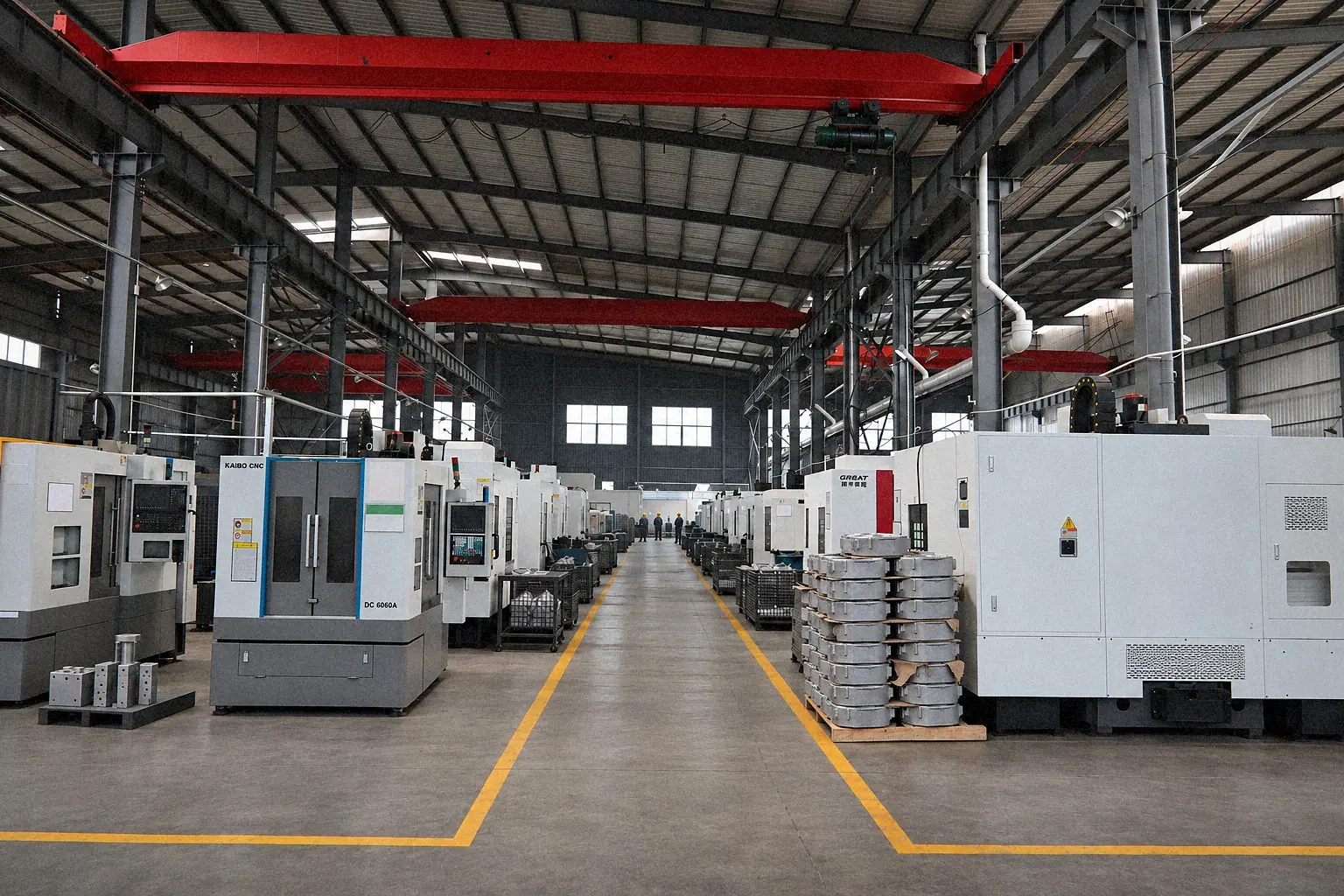
Gravity and tilt-pour casting are the primary processes. The same Ningbo site of about 16,300 m² includes casting, core making, tooling, in-house T5/T6 heat treatment, CNC machining and inspection. A356 and ZL114 are used for gravity and tilt-pour projects. Low-pressure casting has been in-house since 2014, and sand casting is also done in-house.
Review the equipment and project inputs on the aluminum gravity casting capability page. For a bracket project, the suspension bracket RFQ guide identifies application-specific inputs without changing the general quotation basis.
Define the Tooling Scope
State whether the project needs a new mold or a transfer of existing tooling, and identify ownership, current condition, revisions, core requirements and records available for review.
Bohua tooling facts
Bohua designs and makes molds in-house using UG and SolidWorks, with AnyCasting for casting simulation. Most molds use GB 45 carbon steel, while H13 is used for higher requirements. Typical A356 permanent-mold life is about 20,000-50,000 shots. That range applies to GB 45 carbon-steel molds; H13 molds last about 100,000 shots with regular maintenance. The time from drawing confirmation to first article is 5–6 weeks.
Keep tooling charges, machining fixtures, inspection fixtures and part supply separate in the quotation. If an existing tool will move between suppliers, use the existing tool transfer checklist to document the handover.
Define What Leaves the Factory
Specify whether Bohua is quoting a casting, a partly machined part or a finished component, then connect every critical requirement to a drawing feature and an inspection record.
| Requirement | Confirmed capability | RFQ input needed |
|---|---|---|
| As-cast dimensions | CT8 | Drawing dimensions and casting datum plan |
| Critical machined dimensions | ±0.02 mm where the feature and datum scheme allow | Critical feature marking and datum references |
| Pressure testing | Air-under-water immersion at 3 bar or more | Pressure, hold duration and acceptance criteria |
| Submission package | PPAP up to Level 5 | Required level and customer-specific requirements |
Impregnation is used only with customer approval and is performed by a qualified subcontractor. If it may be permitted, state the approval rule and required records in the RFQ.
For management-system and submission evidence, review Bohua's IATF 16949 certification and PPAP scope.
Move from Project Input to an Agreed Scope
The quotation becomes comparable when technical assumptions, delivery condition and approval responsibilities are resolved in sequence.
- Project fit. Provide the part function, drawing status, annual volume and required delivery condition. The review identifies a possible manufacturing route and open decisions.
- Technical scope. Confirm the controlled drawing, material and temper, critical features, tooling status, machining datums and acceptance requirements.
- Quotation basis. Record recurring part supply separately from tooling, fixtures, samples, reports and other one-time deliverables. List assumptions and exclusions.
- Approval path. Agree which samples and records are required, who approves them and what releases production.
MOQ is quoted by annual volume; small batches are negotiable. Give both expected annual demand and the planned order quantity so setup, inspection and delivery assumptions can be reviewed for the actual project.
Submit the Project and Send Drawings by Email
Use the form for project details. Drawing attachments cannot currently be uploaded on the website. After submitting, email the controlled PDF and STEP files to linda@ningbobohua.com, using the same company, part description and revision. If you need an NDA before sharing drawings, tell Linda before sending files.
Tell us about your part
Only your email address and requirement description are required.
Linda, Export Sales · linda@ningbobohua.com
You can also send your inquiry by email. Include your email address and requirement description, including what the part must do. Add your name, company, material, quantity, annual volume and preferred process if available.
Send drawings by email, or ask about an NDA before sharing drawings.
If you want the shortest submission path, use the aluminum casting RFQ form. For a preliminary question, or if you need an NDA before sharing drawings, use the contact and pre-RFQ page.