Ningbo Bohua Mechanical Parts Co., Ltd. · Linda, Export Sales · linda@ningbobohua.com · www.bohua-casting.com
Engineering guide
Sand Casting vs Gravity Die Casting: Process Selection
Sand casting and gravity die casting should be compared against the same drawing, material condition and delivered scope. Tooling reuse, design stability, cores, machining and approval requirements determine the practical choice. Bohua performs sand casting in-house and has upright and tilt-pour gravity equipment, so the RFQ should identify the evidence required from each proposed route.
On this page
Sand casting and gravity die casting are alternative routes for some aluminum components, but their suitability depends on the part and production plan. A useful comparison starts with the same drawing, alloy requirement, delivered condition and acceptance criteria. Comparing unrelated typical values can conceal the operations needed to deliver the finished part.
Define the route being compared
Sand casting uses an expendable mold system. Gravity die casting uses a reusable mold with gravity filling; the actual tooling may still use expendable cores for internal geometry. Specify the proposed mold and core arrangement rather than assuming that either label describes every feature or operation.
Ask the supplier to explain parting, draft, cores, feeding, trimming, heat treatment when specified and machining. The route must support the drawing and approved material condition, not merely reproduce the outside shape.
Here, gravity die casting means the permanent-mold route; sand molds can also be filled by gravity. The comparison concerns the mold and complete manufacturing route. For definitions and design boundaries, see the permanent-mold casting guide.
Compare tooling and geometry
Compare which tools, cores and later operations each proposal requires for the same component.
| Review area | Questions for the sand-casting proposal | Questions for the gravity-die proposal |
|---|---|---|
| Tooling scope | Which patterns, core boxes and fixtures are included? | Which mold, inserts, core equipment and fixtures are included? |
| Internal passages | How will cores locate and be removed or cleaned? | Which features need cores and how are they controlled? |
| Design changes | Which tools and approvals change with the drawing? | Which mold elements and process approvals need revision? |
| Program demand | How will batch size and releases be supported? | What tooling life and maintenance assumptions support the demand? |
| Delivered part | Which operations remain after casting? | Which operations remain after casting? |
Review both routes against the purpose of your prototype or medium-volume program. Tool reuse, design stability, geometry, development timing and the required validation can change the decision.
A changing design or limited release quantity can justify reviewing sand tooling first. Repeated demand for stable geometry can justify reviewing permanent tooling. Check final cost, surface acceptance and dimensional capability for the proposed route before making your choice.
At Bohua
For the tilt-pour side of a sand-versus-permanent-mold comparison, Bohua’s casting weights range from under 0.2 kg to over 30 kg.
Its tilt-pour walls are normally about 3 mm, while 2.5 mm is limited to small gate-adjacent areas enabled by the mold and gating design.
Ask for a separate assessment of the sand-mold proposal using the same drawing; do not copy these tilt-pour figures into its capability column.
Sand and gravity casting at Bohua
Bohua performs sand casting in-house and operates both upright and tilt-pour gravity casting equipment.
At Bohua
| Manufacturing resource | Quantity (machines) or scope | How to use the fact |
|---|---|---|
| Sand casting | In-house | Review the proposed mold, cores and delivered condition against the drawing. |
| Tilt-pour casting machines | 32 machines | Compare the geometry with the approved tilt-pour range. |
| Upright gravity casting machines | 10 machines | Assess tooling and part orientation for the proposed route. |
| Hot-box core shooters | 10 machines | Some tilt-pour parts use sand cores; a sand core does not make the outer mold a sand mold. |
| Tooling | Designed and made in-house | Define ownership, revision, maintenance and replacement responsibilities. |
For A356 permanent molds, Bohua’s mold-life range is approximately 20,000–50,000 cycles. That range applies to GB 45 carbon-steel molds; H13 molds last about 100,000 shots with regular maintenance. The interval from drawing confirmation to first article is 5–6 weeks. For your project, agree the mold-life assumptions for the specified tooling and set production delivery separately from the first-article milestone.
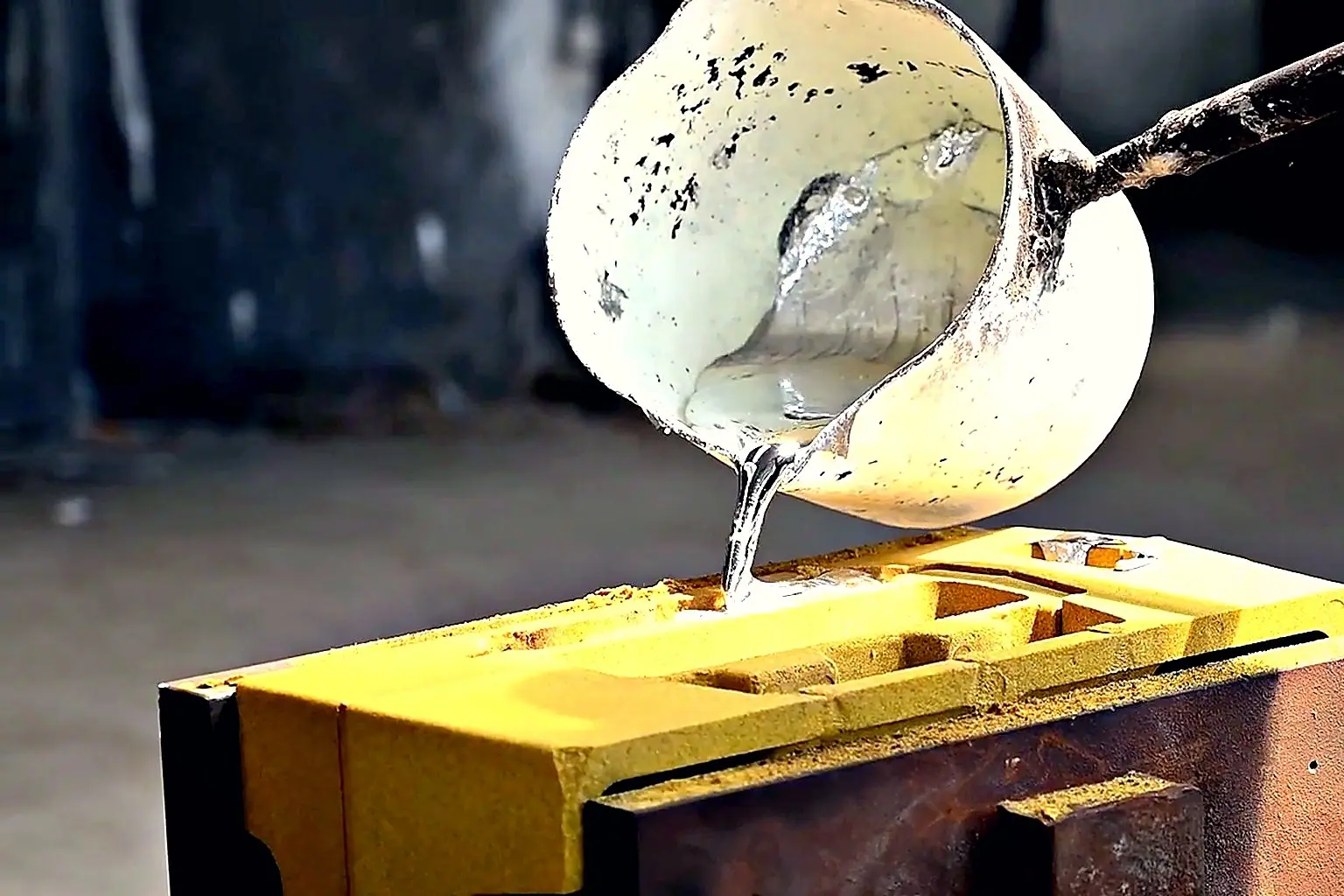
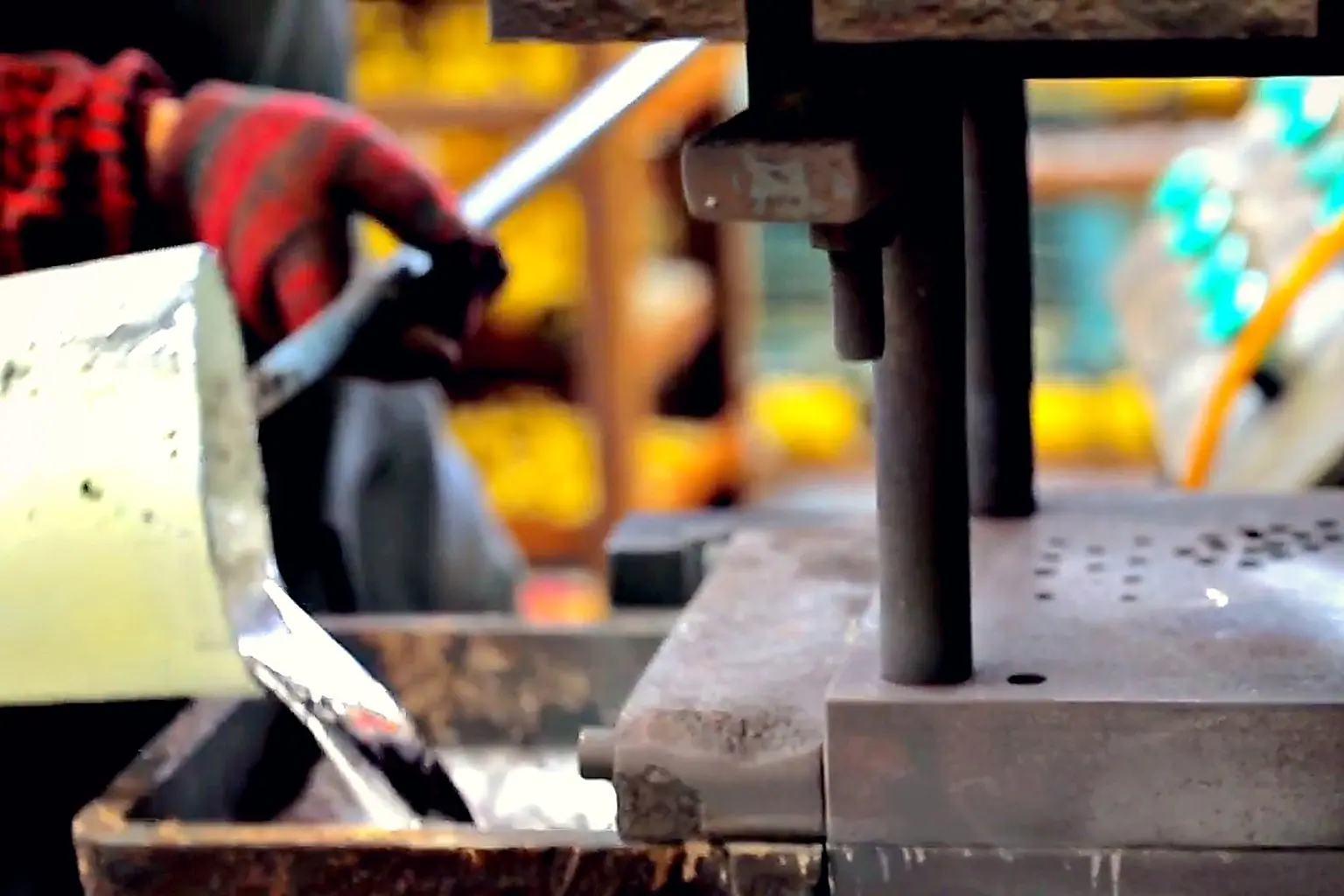
Review the in-house sand casting scope and Bohua gravity casting capabilities before deciding which proposal to request.
Use comparable dimensional evidence
A general plus/minus range is not a fair accuracy comparison unless it refers to the same dimension, geometry, casting state and measurement basis. A process described as more accurate cannot be justified by a table that uses different size bands or mixes total tolerance width with bilateral values.
Provide the controlling standard and edition, general note, individual dimensions and geometrical controls. Review the casting tolerances guide and obtain the applicable controlled standard.
ISO 8062-3:2023 covers indicated dimensions and defined general geometrical tolerances within its scope. It does not apply to a 3D CAD model without indicated dimensions. Use the controlled standard’s numerical tables with your drawing requirements to select and check the applicable tolerances.
Source: ISO 8062-3:2023, official scope.
At Bohua
For a machined delivery, Bohua can achieve ±0.02 mm on agreed key dimensions.
T5 and T6 heat treatment are carried out at Bohua’s own plant.
Agree the as-cast grade for each route separately, then compare dimensional results in the same delivered condition; identify any heat treatment and final machining in that condition.
Compare surface texture in the delivered state
Ask which surfaces are as cast and which will be machined or finished. State the texture parameter, unit and method where a numerical limit is required. An RMS/Rq value and an Ra value cannot be treated as the same metric, and an unspecified unit makes a comparison incomplete.
Use relevant sample or production evidence to discuss achievable surfaces. Identify which sealing faces, bearing seats and other functional features require machining for the proposed route. Their final geometry and acceptance criteria control that decision.
For a cored fluid passage, include core removal, internal cleanliness and sealing-face inspection. The coolant water outlet RFQ scope identifies the manufacturing inputs for that part family.
Compare the complete commercial scope
Request separate lines for tooling, casting, heat treatment, machining, finishing, inspection and packaging. State sample, pilot, annual and lifetime quantities. Include maintenance, replacements, requalification and change ownership where they affect the program.
Keep manufacturing cost separate from transport, duties and other destination costs. Use dated quotations and explicit assumptions; no fixed annual quantity guarantees that one process is cheaper. A preliminary estimate should identify unresolved design and acceptance questions.
At Bohua
At Bohua, quantities are quoted by annual volume; small batches are negotiable.
Require each proposal to explain the sample-approval path and the cost and timing assumptions at both current and future quantities. Recompare when the drawing or acceptance scope changes.
Approval plan before tool release
Approve the manufacturing and evidence scope before authorizing tooling.
- Confirm the drawing and model revision and the material requirement.
- Identify critical zones, machined datums, internal passages and inspection access.
- Agree first-article evidence and the production control plan.
- Define permitted repairs, deviations and change notification.
- Confirm tool ownership, maintenance, delivery milestones and responsibilities.
- Compare quotations only after inclusions and exclusions are aligned.
Questions before choosing a route
Use the proposed process to answer the program’s actual validation needs.
Does gravity die casting always achieve tighter tolerances?
Tolerance capability depends on the feature and proposed route. Compare the same features against approved requirements and evidence from the proposed route.
Should a prototype use the eventual production process?
Use the route that answers the prototype's purpose. If it is meant to validate production material or process behavior, identify any differences and the later validation still required.
What should a buyer send for route selection?
Provide the drawing, critical features, alloy/temper requirements, quantity plan and acceptance package through the process-comparison RFQ route.
Send one drawing for a comparable process review
Submit the RFQ details, then email your drawing for a structured quote review. Not sure which process fits? Tell us what the part must do. In a free drawing review, our engineers recommend a process and suggest design changes where needed.
Send your drawing →