Ningbo Bohua Mechanical Parts Co., Ltd. · Linda, Export Sales · linda@ningbobohua.com · www.bohua-casting.com
Engineering guide
Gravity Casting vs Die Casting: How to Choose (2026)
Choose gravity casting or high-pressure die casting by the finished-part requirements. Geometry, alloy, heat treatment, machining exposure and annual demand all affect the decision. Bohua operates gravity and tilt-pour equipment as well as 280 t and 450 t die casting machines. Compare both routes against the same drawing and acceptance criteria before committing to tooling.
On this page
Choose by finished-part requirements
Gravity casting fills a reusable mold through a gravity-fed gating system. High-pressure die casting (HPDC) injects metal into the die. Choose between them by checking geometry, alloy and temper, machining exposure, acceptance criteria and annual demand together.
Thin walls and fine external detail can favor HPDC. A heat-treatable alloy with internal sand-core passages can favor a gravity route. Use those features to shortlist a route, then verify the finished part against your specification.
At Bohua
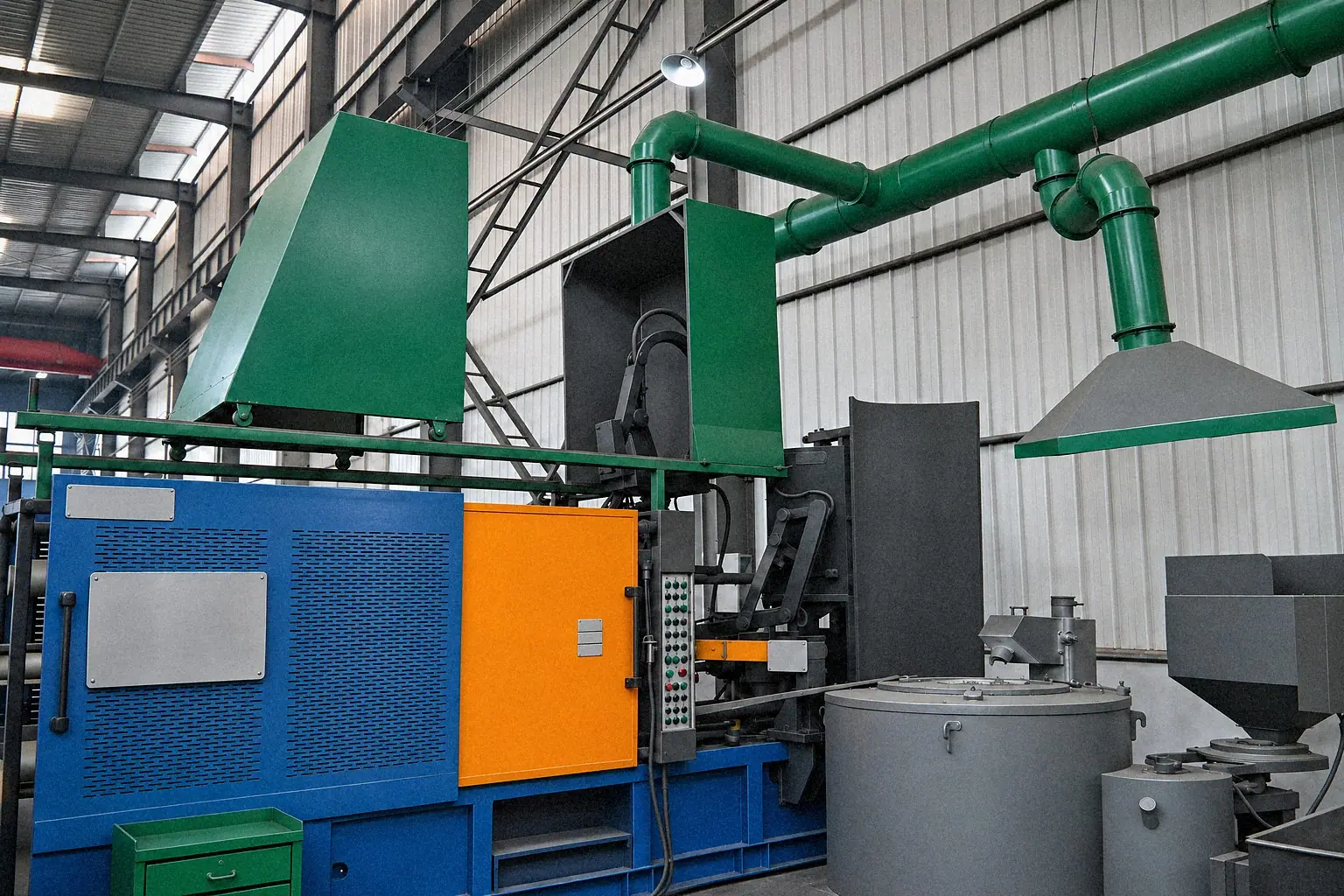
Bohua operates 32 tilt-pour machines and 10 vertical gravity casting machines. Its two die casting machines are rated at 280 t and 450 t. Send the drawing, die dimensions, projected area and casting weight so we can review equipment fit.
| Your question | What to send | What happens next |
|---|---|---|
| Which route fits my geometry? | Current drawing, model, wall sections, internal passages and annual demand. | Send the package for a gravity casting or die casting review so we can compare the routes against your requirements. |
| Will the material condition meet my strength requirements? | Alloy, temper, specimen basis and mechanical-property acceptance limits. | Use the A356 alloy information to prepare material inputs, then agree the qualification evidence for the proposed route. |
| How should a pressure-tight housing be evaluated? | Pressure boundary, machined faces, test conditions and impregnation permission. | Use the pump casing RFQ requirements to define the test and finished-part scope for review. |
| How do I compare the complete quotations? | Tooling, casting, machining, inspection and delivery scope at the same annual demand. | Align the scope with the casting quote comparison sheet before selecting a route. |
Compare the features that control acceptance
Compare both routes against one finished-part specification. A change of alloy, temper or inspection scope makes the quotations unequal unless the buyer approves that change.
| Selection factor | Gravity casting review | HPDC review |
|---|---|---|
| Thin sections and detail | Check fill length, wall transitions and feeding before fixing geometry. | Check filling, venting and the die layout for thin walls, ribs and bosses. |
| Internal passages | Evaluate sand-core support, removal and cleaning access. | Evaluate core-pull directions and any proposed special core technology. |
| Alloy and temper | Select the required material condition and qualification basis. | Confirm that the proposed alloy and process support the specified heat treatment or joining. |
| Machined surfaces | Mark stock, datums and critical zones exposed by machining. | Check whether material removed from the casting exposes internal discontinuities. |
| Pressure tightness | Validate the pressure boundary at the specified test stage. | Use the same medium, pressure, hold time and acceptance criteria. |
| Demand and tooling | Compare tool scope, revision risk and downstream work at the forecast demand. | Compare cavity count, die scope, cycle evidence and downstream work at the same demand. |
For equipment and manufacturing scope, see Bohua gravity casting and Bohua die casting. For definitions and design boundaries, see the permanent mold casting guide.
At Bohua
On Bohua’s tilt-pour route, walls are generally about 3 mm; only small areas near the gate can reach 2.5 mm with suitable mold and gating design.
Bohua can achieve ±0.02 mm on key machined features, subject to the drawing and datum scheme.
Agree the as-cast tolerance for each route separately, and request a drawing-specific HPDC assessment rather than transferring the tilt-pour wall figures to die casting.
Check alloy, heat treatment and strength
Strength depends on the specified alloy, temper, casting condition and test basis. Specify the mechanical-property tests and acceptance limits for either route.
Conventional HPDC can retain gas that makes solution heat treatment problematic. Specialized vacuum-assisted processes can reduce this limitation. For T6 treatment, confirm the proposed alloy and die-casting process together, then agree the qualification evidence for your part.
General process context: Leibniz University Hannover, Vacuum Die Casting. This is an industry process distinction, not a Bohua vacuum-die-casting capability claim.
At Bohua
Bohua uses A356 and ZL114 for gravity and tilt-pour casting. T5/T6 heat treatment is available in-house. For an HPDC proposal, identify the alloy separately and agree the part-specific heat-treatment qualification before selecting that route.
For alloy-specific requirements, see A356 alloy information. A load-bearing part should identify the specimen basis and acceptance tests; the automotive suspension bracket RFQ page lists the drawing inputs for that review.
Pressure-tight and internally cored pump housings
For a pump housing, compare the finished pressure boundary and internal passages before comparing cycle time. A casting route that cannot meet the agreed leak test is not an equivalent quotation.
| Housing feature | Information to supply | Decision it supports |
|---|---|---|
| Inlet, outlet and internal chambers | Sectioned geometry, core access and cleaning requirements | Whether the proposed core system can form and clean the flow path |
| Seal chamber and bearing bore | Datums, finished sizes, machining stock and surface texture requirements | Whether casting and machining can preserve alignment and functional surfaces |
| Pressure boundary | Service medium, operating conditions and required test procedure | Whether the route can meet acceptance after the required machining and finishing |
| Cyclic duty and fluid exposure | Load spectrum, temperature range and corrosion requirements | Whether the material condition and validation plan match service |
| Impregnation or repair | Written permission or prohibition and required retesting | Whether both quotations include an acceptable process route |
Machining can expose subsurface discontinuities. Define whether the acceptance test occurs before or after machining, coating or an approved impregnation operation. State test pressure and service pressure separately, with the purpose and conditions for each.
At Bohua
Bohua uses air-under-water immersion leak testing at 3 bar or more. Impregnation is performed by a qualified external supplier only with customer approval. A pump-housing test pressure, hold time and pass criterion must be agreed for the drawing.
Use the pressure-tight pump casing RFQ requirements to define the finished pressure boundary and inspection scope.
Compare total scope at the same demand
There is no universal annual-volume crossover between gravity casting and HPDC. Compare the complete delivered scope at the same demand and revision assumptions.
- Separate tooling, core tooling and fixtures from recurring casting work.
- Compare metal use, casting conversion, trimming, heat treatment, machining, finishing and inspection on the same basis.
- Include approved scrap and rework assumptions, packaging and delivery scope.
- Ask how a design revision, extra machining stock or tighter inspection changes each route.
- Request cycle-time, yield and porosity evidence for your part, with the measurement basis for each figure.
Use the aluminum casting quote comparison sheet to keep those scope items visible.
At Bohua
Bohua’s stated interval from drawing confirmation to first article is 5–6 weeks.
Compare the proposed first-article condition and approval milestones for each route using the casting lead-time guide; agree production delivery separately.
Send a comparable drawing package
Send the information that can change the route recommendation: the current geometry, finished-part requirements and production demand.
- Revision-controlled 2D drawing and 3D model.
- Specified alloy, temper and controlling specification with edition.
- As-cast and machined features, datums and surface requirements.
- Pressure, structural or cosmetic acceptance requirements and the required inspection records.
- Sample quantity, annual demand, batch sizes and expected design changes.
- Tool ownership, finishing scope, destination and target timing.
Submit the package through the gravity casting or die casting review request. State any permissible alloy or geometry changes explicitly so the two routes can be compared fairly.
Send your drawing for a process review
Include the drawing revision, alloy, annual volume, machining scope and acceptance requirements. Not sure which process fits? Tell us what the part must do. In a free drawing review, our engineers recommend a process and suggest design changes where needed.
Send your drawing →