Ningbo Bohua Mechanical Parts Co., Ltd. · Linda, Export Sales · linda@ningbobohua.com · www.bohua-casting.com
Industry
Energy & Petrochemical
Bohua reviews drawing-based aluminum casting RFQs for valves, pump housings, meter bodies, manifolds, and other flow-control equipment. Send your service conditions and drawing. We will review the material, casting route, pressure boundary, machining, test method, inspection evidence, and acceptance criteria for your project.
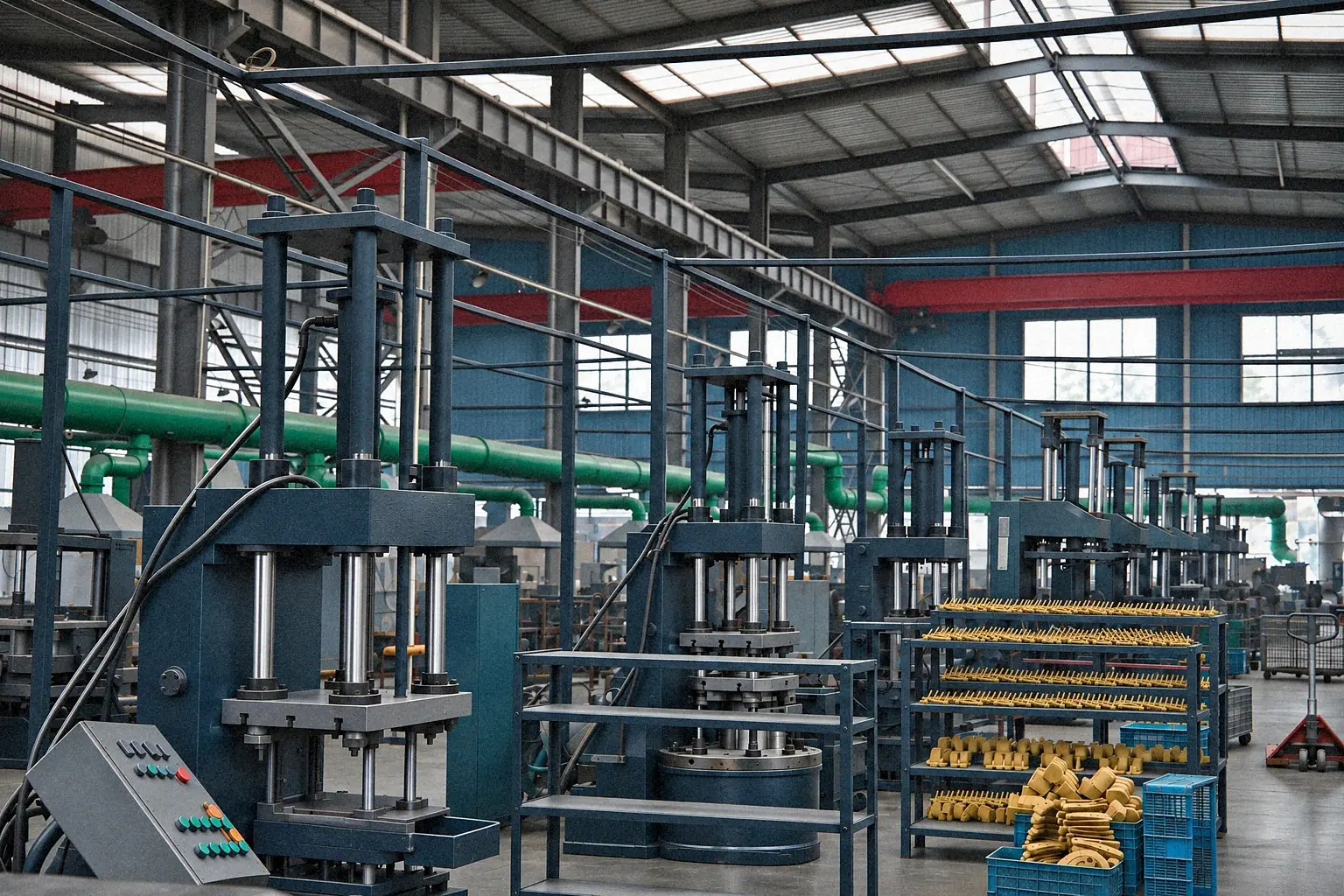
Manufacturing scope for energy-equipment RFQs
Send your valve body, pump housing, meter body, manifold, or adjacent flow-control casting drawing for a feasibility review. We will check the requirements against our manufacturing and inspection scope. Include the customer approval requirements for your component in the review package.
- Casting experience
- Since 1994
- Tilt-pour machines
- 32
- Vertical gravity machines
- 10
- Low-pressure casting
- In-house since 2014
- Vertical machining centers
- 16
- Immersion test capability
- 3 bar or more
Confirmed process range
Bohua's main processes are gravity casting and tilt-pour gravity casting, with A356 and ZL114 as the confirmed alloys for those routes. Low-pressure casting and sand casting are also available in-house. The correct route is chosen from geometry, pressure boundary, core requirements, machining stock, volume, and acceptance evidence.
Use the gravity casting capability page and the low-pressure casting capability page to review each route's manufacturing scope. Include the pressure boundary and acceptance requirements with your geometry so we can review the process options together.


Service conditions belong in the first RFQ
The casting supplier needs the actual service and acceptance inputs before recommending a material or route. For your valve, meter, or pump, specify pressure, corrosion exposure, sealing, and inspection requirements so we can assess the intended service conditions.
| Requirement group | Buyer input | Manufacturing review |
|---|---|---|
| Service environment | Fluid or gas, operating and test conditions, temperature range, external exposure, and governing specification | Material and process feasibility; surface or post-process requirements |
| Pressure boundary | Wet zones, isolated cavities, open ports, plugs, covers, seals, and wall transitions | Core and tooling concept, process fit, machining sequence, and test-fixture boundary |
| Machined interfaces | Flanges, gasket faces, bores, threaded ports, grooves, datums, tolerances, and surface finish | Stock allowance, fixture access, machining route, gauges, and CMM scope |
| Acceptance evidence | Internal-quality zones, dimensional characteristics, pressure-test method, sampling, and report format | Inspection feasibility, equipment selection, sequence, and record plan |
Product-specific inputs are covered on the aluminum valve body manufacturing page and the aluminum pump housing manufacturing page. Those pages should be used when the RFQ has moved from industry research to a defined part family.
Define the pressure test instead of naming one
A test requirement is complete only when the medium, pressure, duration, test stage, sealed boundary, allowable result, sampling plan, and record are stated. Give each supplier the same test inputs and list any open items for review before comparing quotations.
Bohua's confirmed method
Bohua has an air-under-water immersion test area with capability at 3 bar or more. The project must define the actual pressure, duration, test stage, fixture boundary, acceptance criteria, and required records. Impregnation is only performed by a qualified outside provider after customer approval.
- Before machining: state whether the as-cast pressure boundary can be sealed and what later stock removal may change.
- After machining: identify finished ports, sealing faces, plugs, grooves, and any surfaces used by the test fixture.
- After finishing or assembly: state whether coating, impregnation, installed plugs, or covers are present during acceptance testing.
- Records: define identification, result fields, frequency, retention, and the connection to drawing revision or production lot.
For the broader pressure-boundary review, see pressure-tight aluminum casting requirements. Include a test specification for your part so we can review its pressure boundary and acceptance conditions.
Machining and inspection capability
Sealing faces, bores, threaded ports, and mounting datums need one coordinated machining and measurement plan. The drawing should identify which features control assembly and which results require recorded evidence.
Equipment at the Ningbo site
Bohua has 16 vertical machining centers, 2 CNC engraving and milling machines, 22 CNC lathes, and 2 large lathes. Inspection equipment includes Hexagon Global S and NANO Metrology coordinate measuring machines, Unicomp UNC-160 and Y.MU2000-D X-ray systems, an Oxford optical emission spectrometer, hardness and mechanical-property equipment, a metallographic microscope, and a surface roughness tester.
The confirmed general capabilities are CT8 for as-cast tolerances and ±0.02 mm for critical dimensions after machining. These values apply to different manufacturing conditions. Project feasibility depends on geometry, datums, fixtures, measurement access, and the agreed acceptance plan.
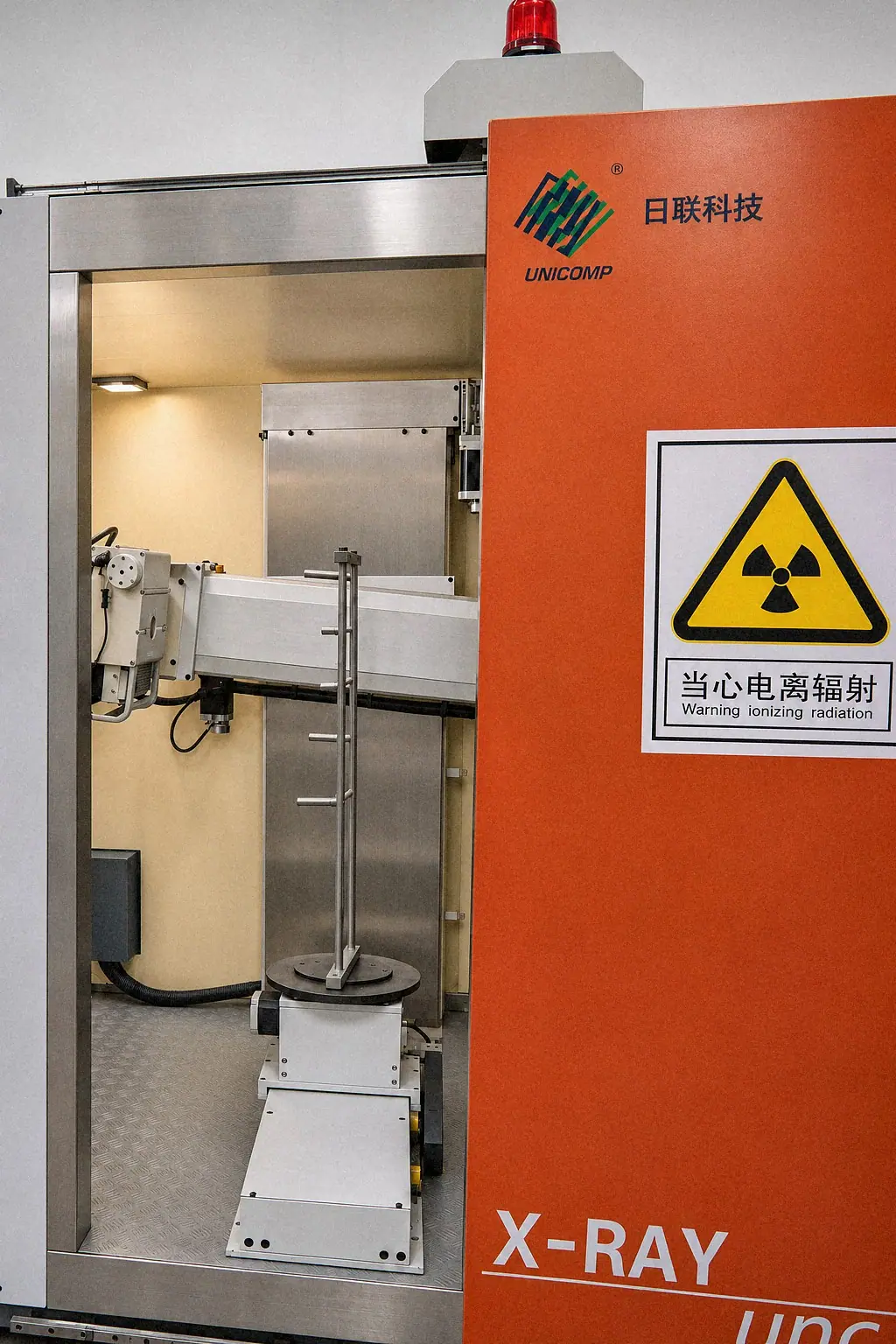
The quality control and inspection page lists the available evidence. Buyers should define the critical zones and acceptance reference for X-ray review, the datum frame and characteristics for CMM reporting, and the required material record.
What to send for an energy-equipment casting review
A usable RFQ connects the service condition to the drawing, manufacturing scope, and acceptance evidence. Send technical and commercial inputs together so the quote does not rely on hidden assumptions.
- Current files. Provide revision-controlled 2D PDF and 3D STEP or IGES files, plus assembly context for pressure and sealing interfaces.
- Service definition. State the medium, operating and test conditions, temperature range, external environment, and governing specifications.
- Material and condition. Define alloy, temper, material standard, required certificates, and any prohibited or approval-dependent post-process.
- Finished scope. List heat treatment, machining, threads, surface finish, coating, cleaning, impregnation, testing, assembly, and packaging.
- Acceptance plan. Mark critical dimensions, internal-quality zones, pressure-test criteria, sampling, identification, and report format.
- Program inputs. Provide annual volume, release quantities, tooling ownership or transfer status, destination, and required approval schedule.
The aluminum casting RFQ checklist can be used to organize the package. When it is complete, send the energy-equipment casting RFQ for drawing review.
Further reading
Thermal parts need their own design inputs. See aluminum gravity casting for heat sink applications for fin, wall and contact-surface considerations.
Send an energy-equipment casting drawing for review
Include service conditions, material specification, pressure boundary, machining scope, test acceptance, annual volume, and inspection records. Not sure which process fits? Tell us what the part must do. In a free drawing review, our engineers recommend a process and suggest design changes where needed.
Send your drawing →