Ningbo Bohua Mechanical Parts Co., Ltd. · Linda, Export Sales · linda@ningbobohua.com · www.bohua-casting.com
Engineering guide
A356 Aluminum Gravity Casting for Automotive: T6 & PPAP
A356 gravity casting is a candidate for automotive parts that need heat treatment, machined interfaces and documented acceptance. It offers a useful balance between castability, strength, corrosion resistance, and heat-treat response. Bohua carries out T5/T6 in-house and supports PPAP up to Level 5. Component approval depends on the specified tests and actual results.
On this page
- What Is A356 Aluminum?
- Gravity and die casting are compared on another page
- Chemical and Mechanical Characteristics
- Why T6 Heat Treatment Matters
- Automotive Parts Commonly Made in A356 Gravity Casting
- Design Considerations for Engineers
- Quality Risks to Control
- What Automotive Buyers Should Ask Suppliers
- Why A356 Gravity Casting Fits the Automotive Supply Chain
- Final Takeaway
- Bohua evidence for an automotive review
- Specify the T6 and PPAP acceptance package
What Is A356 Aluminum?
A356 is an Al-Si-Mg casting alloy widely used in transportation, industrial machinery, and automotive systems. In gravity casting, it is valued because it can deliver good castability while still reaching attractive mechanical properties after heat treatment.
This guide explains how A356 aluminum gravity casting works in automotive applications, why T6 heat treatment matters, which parts are most suitable, and what engineers should consider during RFQ and supplier qualification.
Typical advantages of A356 include:
- Good strength-to-weight ratio
- Good corrosion resistance
- Good heat treatability
- Good machinability after proper process control
For automotive applications, these characteristics matter because many components must handle vibration, thermal cycling, and machining precision without excessive weight.
Gravity and die casting are compared on another page
Automotive teams often compare A356 gravity casting with ADC12 or other high-pressure die-casting routes.
The decision depends on application needs.
For a route comparison, see the gravity casting versus die casting guide. Define the geometry, temper and acceptance evidence before choosing.
Chemical and Mechanical Characteristics
Exact numbers vary by specification, heat treatment route, section thickness, and foundry process, but engineers typically value A356 because of its combination of:
- Silicon content for castability
- Magnesium content for age hardening response
- Mechanical improvement after solution treatment and aging
Why T6 Heat Treatment Matters
A356 without proper heat treatment does not deliver its full potential.
T6 generally includes:
- Solution heat treatment
- Quenching
- Artificial aging
The purpose is to improve strength and hardness through precipitation hardening. In automotive use, this matters because the part may face:
- Dynamic loading
- Thermal cycling
- Machining after casting
- Assembly stress
- Long service life expectations
For buyers and engineers, the key point is this: when you specify A356-T6, you are not only buying a material. You are buying a process discipline.
That means the foundry must control:
- Melt quality
- Porosity level
- Heat treatment consistency
- Dimensional stability after treatment
- Final inspection after machining
Automotive Parts Commonly Made in A356 Gravity Casting
A356 is a candidate for the following automotive component types. These are general design examples; approval depends on the drawing, manufacturing route and validation results.
1. Intake manifolds
A356 gravity casting is suitable for intake manifold designs where weight reduction, shape complexity, and machining features all matter. Gravity casting can support robust wall sections and post-machined sealing surfaces.
See the intake manifold RFQ inputs.
2. Gearbox housings
Gearbox housings need a good balance of stiffness, machinability, and dimensional consistency. A356 works well where the design requires machined bores, mounting faces, and reliable housing integrity.
3. Suspension brackets and support structures
For suspension-related brackets, A356-T6 offers an attractive combination of weight savings and structural capability. Proper foundry control is important because these parts may see dynamic load cycles.
See the suspension bracket validation inputs.
4. Pump housings and coolant system components
Automotive thermal management systems often require pressure-capable housings, machined interfaces, and corrosion resistance. A356 gravity castings are well suited to this category.
See the coolant water outlet manufacturing inputs.
5. Motor housings and e-mobility components
As vehicle electrification grows, lightweight housings with good thermal and structural behavior become more important. A356 gravity casting can support medium-volume EV-related components where heat treatment and dimensional stability matter.
Design Considerations for Engineers
When designing A356 gravity cast parts, engineers should align design intent with process reality.
Wall thickness
Avoid extreme wall variation where possible. Large changes in section thickness increase shrinkage and porosity risk.
Machining allowance
If the part has critical faces, bores, or sealing surfaces, provide realistic machining allowance. Overly tight as-cast expectations usually raise cost without improving function.
Radii and transitions
Smooth transitions reduce stress concentration and improve metal flow. Sharp corners often create both casting and durability problems.
Datum strategy
The drawing should reflect how the part will actually be machined and inspected. Good datum planning improves repeatability during both sample validation and production.
Pressure integrity expectations
If the part must hold fluid, air, or oil pressure, specify the test method clearly. This affects process route, impregnation decision, and inspection planning.
At Bohua
For an automotive drawing review, Bohua separates routine as-cast CT8 from critical machined dimensions of ±0.02 mm. The tighter as-cast capability of about DCTG 6 applies to selected demanding dimensions, not every feature on an automotive component.
Quality Risks to Control
Automotive teams should pay special attention to these risks in A356 gravity castings:
Porosity
Internal porosity can affect strength, leak integrity, and machining performance. X-ray inspection and process control are important for critical parts.
Heat treatment distortion
T6 treatment can change dimensions, especially on thin or asymmetrical parts. This is why process planning and post-treatment machining strategy matter.
Inconsistent mechanical properties
If melt practice and heat treatment are unstable, tensile and hardness results can drift. Buyers should request clear material and heat treatment control.
Surface defects on machined features
Casting cleanliness and stable allowance are important if the part has sealing surfaces or cosmetic requirements.
At Bohua
Before each heat is poured, Bohua requires acceptable vacuum hydrogen and Oxford spectrometric checks after melt treatment. For internal indications, Bohua uses digital radiography graded to GB/T 11346-2018, with the acceptance grade specified by the customer. Connect the melt, casting and inspection records to the part approval requirements.
What Automotive Buyers Should Ask Suppliers
When qualifying an A356 gravity casting supplier, ask for:
- Alloy specification control method
- Heat treatment route for T6
- CMM capability for critical dimensions
- X-ray capability for internal defect evaluation
- Pressure/leak testing approach if applicable
- Automotive quality system evidence, such as IATF 16949:2016 where relevant
- Sample reports and traceability examples
For OEM and Tier sourcing, these questions matter as much as price.
At Bohua
Bohua's drawing-confirmation-to-first-article interval is 5–6 weeks.
Agree separately when automotive sample validation and customer submission approval must be completed. A first article is one milestone in that schedule.
Why A356 Gravity Casting Fits the Automotive Supply Chain
Automotive programs need a process that balances cost, mechanical performance, tooling practicality, and manufacturing repeatability. A356 gravity casting fits well when:
- Volume is meaningful but not extreme die-cast scale
- Strength matters more than ultra-low cycle time
- Machined interfaces are critical
- Heat treatment is required
- The part is functionally important but still cost sensitive
This explains why the alloy continues to appear in both conventional powertrain and newer electrification-related components.
Final Takeaway
For automotive engineers, A356 aluminum gravity casting remains a valuable process route because it offers a strong mix of castability, T6 heat-treat response, corrosion resistance, and structural suitability.
The success of the part, however, depends on foundry capability as much as on alloy choice. Supplier selection should focus on heat treatment discipline, dimensional control, CMM capability, and internal quality verification such as X-ray for critical sections.
Bohua evidence for an automotive review
Bohua’s confirmed scope combines A356 casting, in-house T5/T6 and inspection equipment. Agree which part-specific results you need for project approval.
At Bohua
Bohua uses A356 and ZL114 for gravity and tilt-pour casting. The plant has 32 tilt-pour machines and 10 upright gravity casting machines.
T5/T6 heat treatment is carried out in-house.
Bohua holds IATF 16949:2016 certification issued by NQA, valid through November 20, 2027. PPAP support is available up to Level 5.
Inspection equipment includes Hexagon Global S and NANO Metrology CMMs, Unicomp UNC-160 and Y.MU2000-D X-ray systems, and a WDW-100E tensile testing machine. Fatigue testing capability is available.
Bohua uses air-under-water immersion testing at 3 bar or more. Agree the test pressure, duration and acceptance criteria with us for your part. Impregnation is performed by a qualified subcontractor only with customer approval.
At Bohua
For a long-running automotive shock-absorber bracket program, the pass-rate improvement reported on the melt-treatment page was measured at Bohua's in-house inspection, where nonconforming castings are detected and scrapped.
The later figure of about 10 PPM counts defects traced to Bohua castings after the Tier 1 supplier's inspection and assembly. The Tier 1 customer has named Bohua an Excellent Supplier several times.
See the melt-control account and in-house pass-rate history for the separate factory metric. These figures describe that program, not a guarantee for a new A356 part.
| Equipment | Quantity (machines) |
|---|---|
| Tilt-pour machines | 32 |
| Upright gravity casting machines | 10 |

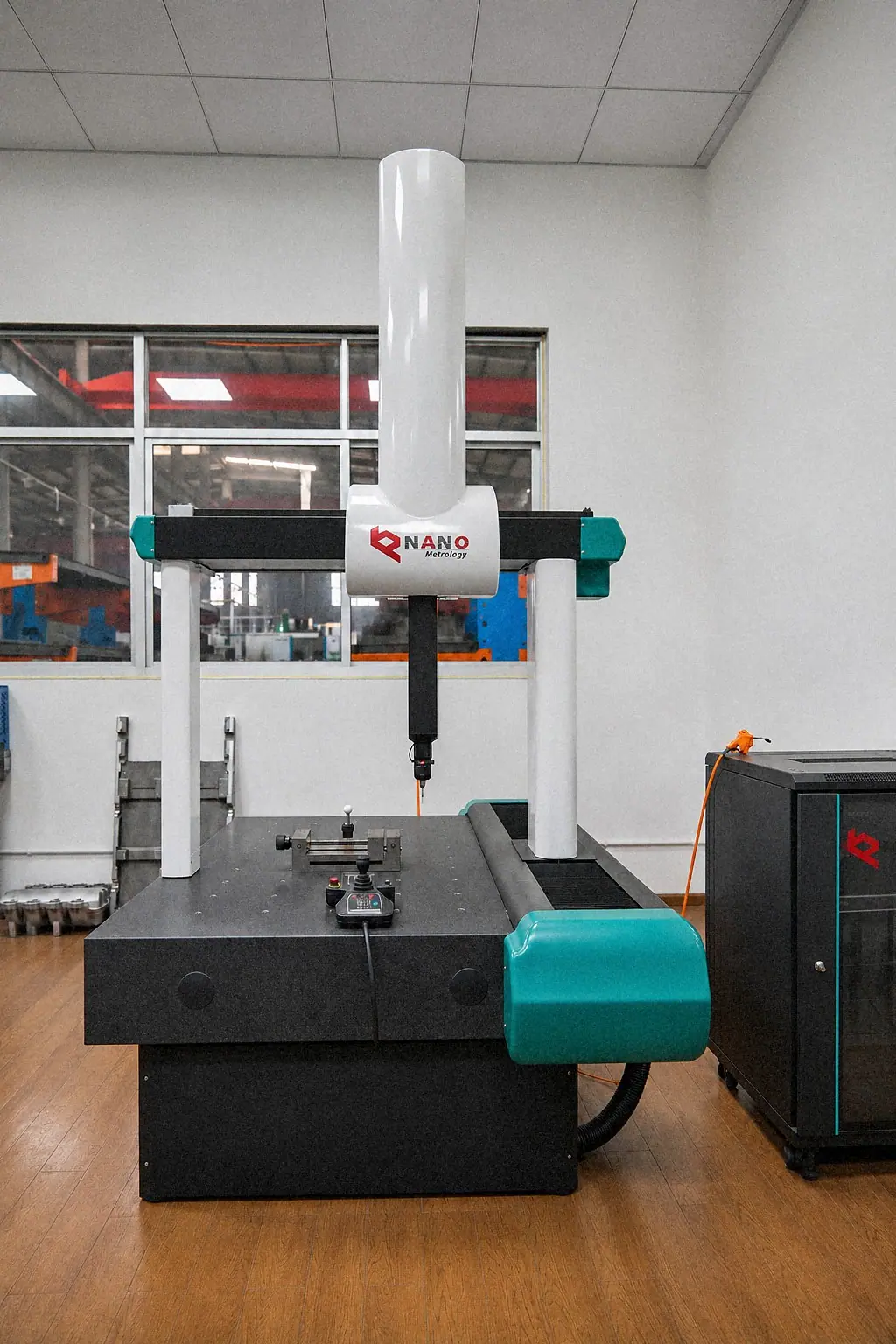
Review the gravity casting manufacturing scope and quality-control equipment and inspection scope. Send your component’s fatigue-life and pressure-performance requirements so we can review the required tests and acceptance evidence with you.
Specify the T6 and PPAP acceptance package
State the material and part acceptance requirements separately from the PPAP submission level.
| Input | What to define |
|---|---|
| Material and temper | Drawing revision, alloy designation, temper and controlling material standard edition |
| Material standard | For permanent-mold castings, review ASTM B108/B108M-25 and customer additions |
| Heat treatment | Applicable practice, such as ASTM B917/B917M-25, and batch-linked records |
| Test specimen | Source, location, orientation, test method and acceptance limits |
| PPAP submission | Customer-required level, documents, sample quantities and approval owner |
| Critical features | Machined datums, pressure boundaries, internal-quality zones and validation tests |
Sources: ASTM B108/B108M-25; ASTM B917/B917M-25. Editions are reference documents; the purchase specification controls the project.
For highly loaded or safety-critical parts, check which requirements the general-purpose material specification covers and identify any additional validation needed. Define the additional validation in the customer specification.
For submission planning, see the PPAP evidence planning guide. Send the controlled drawing, 3D model, annual volume and required delivery condition through the automotive casting RFQ.
Send your drawing and material requirements
Include the drawing revision, alloy and temper, annual volume, delivery scope, and acceptance requirements. Submit the RFQ details, then email your drawing for a structured quote review. Send the drawing, target alloy, finishing scope, MOQ, and delivery timing. Bohua will review it like a real sourcing project, not a generic contact request. Our engineering team can recommend the right alloy, process, and design optimizations for your specific requirements.
Send your drawing →