Ningbo Bohua Mechanical Parts Co., Ltd. · Linda, Export Sales · linda@ningbobohua.com · www.bohua-casting.com
Engineering guide
A356 vs A380 vs ADC12 vs ZL114: Alloy Selection Guide
A356-T6, A380, ADC12 or ZL114 — choose the right aluminum casting alloy by matching the part’s function, delivered condition and approval requirements to a qualified casting route. A356, A380, ADC12 and ZL114 are not interchangeable purchasing names. Bohua uses A356 and ZL114 for gravity and tilt-pour casting. The A380 and ADC12 discussion below is general selection guidance.
On this page
Why Alloy Selection Matters More Than You Think
Many procurement engineers default to whatever alloy their supplier recommends, or simply specify "aluminum" on a drawing.
This approach creates problems:
- Over-specifying an expensive alloy wastes money on parts that do not need premium properties
- Under-specifying a cheap alloy leads to field failures, warranty claims, and customer dissatisfaction
- Mismatching alloy to process —for example, specifying a gravity casting alloy for a die casting mold —creates manufacturing defects
The right approach is to start with your performance requirements and work backward to the alloy and process that delivers them most cost-effectively.
Selecting the right aluminum alloy is one of the most consequential decisions in any casting project. The alloy you choose determines mechanical performance, corrosion resistance, machinability, cost, and even which casting process you can use. Get it wrong, and you face warranty failures, excess machining costs, or parts that simply do not perform.
This guide compares the four most commonly specified aluminum casting alloys — A356, A380, ADC12, and ZL114 —and provides a practical framework for matching alloy selection to your project requirements.
Separate load-bearing, pressure-boundary, thermal and appearance requirements before choosing a grade. Identify which requirement is already fixed by a customer drawing. A material change needs the customer’s approval when that drawing controls the grade.
The Four Major Casting Alloys Compared
A356 (AlSi7Mg0.3) —The Structural Performer
A356 is specified for gravity casting and permanent-mold casting.
Mechanical performance depends on the temper, the specimen and the acceptance specification.
The following notes compare conventional casting routes. The low-copper example is a composition condition, not the specification limit for every A356 casting. Qualify any alternative route separately; cost and cycle comparisons depend on the part and production scope.
Strengths:
- Excellent response to T6 heat treatment , significantly improving strength and hardness
- Corrosion performance has to be taken from the alloy standard named on the drawing.
- Good weldability for post-casting assembly
- Excellent surface finish after machining
Limitations:
- Not suitable for high-pressure die casting (requires gravity or low-pressure processes)
- Higher raw material cost than A380 or ADC12
- Longer cycle times in gravity casting vs. die casting
These are selection characteristics; the drawing still controls the required strength and joining qualification.
| Density: | 2.68 g/cm³ |
|---|
Typical values for comparison only. The governing standard, edition and specimen type must be stated on the drawing.
Source: Rio Tinto, Aluminium: Your guide to automotive innovation, Duralcan typical physical properties. Density is a general physical reference.
For test-specimen limitations and property evidence, see the A356 properties and testing guide.
A380 (AlSi8.5Cu3.5) —The Die Casting Standard
A380 is a high-pressure die-casting alloy specified in North America. No market ranking is given here.
It offers a balanced combination of castability, mechanical properties, and cost.
| Hardness: | 80 HB |
|---|---|
| Density: | 2.71 g/cm³ |
Typical values for comparison only. The governing standard, edition and specimen type must be stated on the drawing.
Source: NADCA Product Specification Standards for Die Castings, 2015, Table A-3-2. Hardness uses a 500 kg load and 10 mm ball. Properties are reference data for separately die-cast specimens, not minimum acceptance values for finished parts.
These notes apply to conventional high-pressure die casting. The heat-treatment limitation concerns gas-containing castings undergoing solution treatment; qualified alternative processes need separate review. Cost comparisons require the same delivery scope.
Strengths:
- Excellent fluidity for filling complex thin-wall geometries
- Good machinability with balanced hardness and chip-breaking characteristics
- Lower cost than A356 due to wider composition tolerance
- Good strength in as-cast condition (no heat treatment needed for many applications)
Limitations:
- Cannot be effectively heat treated —porosity from die casting causes surface blistering during T6
- Moderate corrosion resistance —copper content (~3.5%) reduces resistance compared to A356
- Not recommended for marine or high-humidity environments without surface treatment
- Limited weldability
Best Applications:
Electronic enclosures, automotive brackets and covers, power tool housings, general-purpose die cast components where moderate strength is sufficient.
ADC12 (AlSi11Cu2.5) —The Asian Die Casting Workhorse
ADC12 is the dominant die casting alloy in Asian markets (equivalent to A383 in the US system).
It is similar to A380 but optimized for higher silicon content.
The A383 comparison is a grade-family reference, not approval to substitute material standards. The following heat-treatment limitations concern conventional gas-containing die castings. Strength, tool wear and commercial comparisons depend on the casting and delivery conditions.
Strengths:
- Superior fluidity and die filling compared to A380, excellent for thin-wall castings
- Very good dimensional stability
- Widely available in Asian supply chains with competitive pricing
- Good hot-cracking resistance
Limitations:
- Slightly lower mechanical strength than A380
- Higher silicon content creates more tool wear during CNC machining
- Cannot be heat treated effectively
- Moderate corrosion resistance (copper content ~2.5%)
Best Applications:
Consumer electronics housings, automotive sensor brackets, LED heat sinks, thin-wall enclosures, and high-volume die cast parts sourced from Asian manufacturers.
Compare tool life using the actual microstructure and machining conditions alongside silicon content.
For a deeper dive into ADC12 vs. A356, see our detailed alloy comparison guide.
ZL114: retain the exact drawing designation
A drawing that specifies ZL114 does not authorize a change to A356 or ZL114A. Check the full designation, standard edition, temper and required properties before proposing an alternative.
ZL114A is discussed here as a separate general comparison grade, not as an additional Bohua material.
ZL114A as a general comparison grade
It is specified for applications where maximum mechanical performance is required.
These qualitative notes concern the high-strength candidate in this comparison. Keep the comparison within these candidate alloys and qualify safety-critical parts against their own requirements. Confirm strength, fatigue performance, temper and cost for the specified casting route and test conditions.
Strengths:
- Excellent fatigue resistance for cyclic loading applications
- Good response to T6 heat treatment with tight process control
- Superior performance in safety-critical applications
Limitations:
- Requires precise melt treatment and degassing for optimal properties
- Narrower process window than A356
- Higher cost and more demanding quality control
- Limited international recognition compared to A356 (primarily used in Chinese standards)
Best Applications:
Evaluate the candidate against the project's load, fatigue and acceptance requirements.
- Elongation: use the governing material standard and project acceptance requirement
- Hardness: Specify the test method and acceptance value on the drawing.
See the ZL114 manufacturing scope for Bohua’s confirmed material boundary.
Compare a complete alloy, process and delivery condition. Obtain customer approval for a substitution after comparing the full material requirements.
| Alloy | Route to evaluate | Condition and approval check | Bohua scope |
|---|---|---|---|
| A356 | Gravity or permanent-mold casting | Specify temper, material standard edition and specimen basis | Confirmed for gravity and tilt-pour casting |
| A380 | High-pressure die casting | Specify full grade and casting standard; review heat-treatment compatibility | Die-cast to the customer's specification |
| ADC12 | High-pressure die casting | Identify JIS H 5302:2006 if it governs the order; define part tests | Common die-casting alloy at Bohua |
| ZL114 | Gravity casting | Keep the exact drawing designation; do not silently replace it with ZL114A | Confirmed for gravity and tilt-pour casting |
ASTM B108/B108M-25 is a reference for aluminum-alloy permanent-mold castings. Use the customer-approved standard and edition to determine the exact A356 callout. For ADC12, identify the applicable die-casting material specification before comparing chemistry.
Sources: ASTM B108/B108M-25; JIS H 5302:2006. Editions are reference documents; the purchase specification controls the project.
Side-by-Side Comparison Table
| Property | A356-T6 | A380 (As-Cast) | ADC12 (As-Cast) |
|---|---|---|---|
| Thermal Conductivity (W/m·K) | ~150 | ~96 | ~92 |
| Primary Casting Process | Gravity/Low-pressure | Die casting | Die casting |
Typical values for comparison only. The governing standard, edition and specimen type must be stated on the drawing.
Sources: Rio Tinto, Aluminium: Your guide to automotive innovation, A356-T6 at 22°C; NADCA 2015, Table A-3-2, A380; Protech Japan, die-casting material reference table, ADC12. Protech does not specify the conductivity test temperature. These are separate published examples, not results from a common test program.
Nikkei MC Aluminium publishes a different ADC12 conductivity reference. Confirm the relevant temper, temperature and supplier data before using any comparison value in thermal design.
A Decision Framework: 5 Questions to Choose Your Alloy
Resolve heat treatment, mechanical duty, exposure, volume and total delivered cost before approving an alloy.
1. Does Your Part Require Heat Treatment?
For conventional routes among the four alloys compared here, consider this heat-treatment screening rule:
If the drawing requires T6, review gravity or tilt-pour casting in A356 or the ZL114 grade named on the drawing.
Both alloys respond well to solution heat treatment and aging, delivering significant improvements in mechanical properties.
For conventional gas-containing die castings undergoing solution treatment:
A380 and ADC12 cannot be effectively heat treated when die cast, because trapped gas porosity expands during the solution treatment step, causing surface blisters and internal defects.
If the part needs T6, review gravity or tilt-pour casting with A356 or the ZL114 grade named on the drawing.
This rule does not exclude other heat-treatable alloys or qualified alternative processes. Check ZL114A temper designations against the governing standard. The GB/T 1173-2013 property table lists this grade in T5; retain the T5 label with those values and obtain the applicable data for a T6 requirement.
A356 is a candidate when solution treatment and aging are required. For any proposed grade, specify the temper and confirm that the casting route supports it. Gas entrapment can limit solution treatment of conventional die castings; the process must be qualified rather than judged by a universal prohibition.
Keep the detailed recipe and acceptance planning on the T6 heat-treatment guide.
2. What Are Your Mechanical Performance Requirements?
Match your strength requirements to the alloy's capability:
- Define static load, cyclic load, impact duty and operating temperature.
- State whether a result comes from a separately cast specimen or a specimen cut from the part.
- Identify the required temper and final machining state.
- Agree the approval test, sampling plan and acceptance source.
3. Will the Part Be Exposed to Corrosive Environments?
For this qualitative comparison, consider low-copper heats and similar exposure conditions. The recommendation is an initial screening choice; the service environment and finished-part validation still control approval.
Corrosion resistance is primarily determined by copper content:
- A356 and ZL114 are low-copper alloys; take the copper limit from the alloy standard and edition named on the drawing.
- A380 (~3.5% Cu) and ADC12 (~2.5% Cu) have moderate corrosion resistance; parts exposed to moisture or salt require anodizing, powder coating, or other protective surface treatments
If the part is used outdoors or without a coating, follow the alloy and corrosion requirement on the drawing. Bohua's confirmed gravity and tilt-pour grades are A356 and ZL114.
Define the fluid, moisture, salt exposure and contact with other metals. Review the coating and joining requirements with the alloy. Validate finished-component service life for the specified exposure, alloy and surface condition.
4. What Is Your Production Volume?
Production volume influences both alloy and process selection:
- State sample quantity, batch size, annual demand and expected program life separately.
- Compare tooling assumptions and recurring operations for the same delivered part.
- Avoid choosing a process from a fixed annual-volume threshold alone.
5. What Is Your Budget Constraint?
Alloy cost is just one component of total part cost.
Include heat treatment, machining, surface finish, inspection, packaging and transport in the comparison. Define the quantity used to allocate tooling cost. Include any change to the approved scope when calculating savings from a different alloy.
When the drawing leaves the grade open, compare the quoted scope for ZL114 and for A356. For cost-sensitive projects that still need good mechanical properties, A356-T6 gravity casting often represents the sweet spot.
Common Alloy Selection Mistakes
Check the casting route, pressure requirement, machining scope and grade designation together.
Mistake 1: Specifying A356 for Die Casting
A356 is designed for gravity and low-pressure casting.
For the conventional high-pressure route in this comparison:
If you need die casting, use A380 or ADC12.
Requalify the alloy and process combination when changing the casting route. Discuss route suitability before committing to tooling.
Mistake 2: Choosing A380 for Pressure-Tight Parts
The mistake is approving pressure tightness from the alloy name. For either alloy, including A356, agree a finished-part leak test to verify the pressure boundary.
Mistake 3: Ignoring Post-Machining Requirements
If your part requires extensive machining, A356 or A380 may reduce total manufacturing cost despite higher material prices.
Check that potential saving using quotations for the same machining and delivered-part scope. Mark the sealing faces, bores, ports and stock removal that may expose internal discontinuities.
Mistake 4: Over-Specifying ZL114A
Verify the required strength against the proposed grade’s specified condition and test basis before selecting an upgrade. Retain ZL114 where the drawing specifies it unless the customer approves a documented alternative.
A356 and ZL114: substitution needs approval
A356 and ZL114 are not interchangeable by default. Existing drawing approval can decide the selection before a generic property comparison does.
Compare A356 and ZL114 for gravity die casting: tensile strength, T6 treatment, corrosion resistance, and cost. Take each value from the standard edition, temper and specimen basis named on the drawing.
| Decision input | Evidence to retain |
|---|---|
| Customer specification | Exact alloy designation, standard edition, temper and drawing revision |
| Function | Loads, pressure boundaries, corrosion exposure and temperature |
| Geometry and machining | Wall transitions, critical zones and stock removed from them |
| Validation | Specimen source, fatigue or leak requirements and traceable reports |
| Change approval | Named approval owner and tests to repeat after substitution |
If the existing design is qualified in one grade, compare the cost and scope of revalidation before changing it. Verify equivalence against the governing standards and required properties, then obtain customer approval for the proposed substitution.
How Bohua Casting Helps You Choose
Alloy selection should not happen in isolation.
At Bohua
We support A356 and ZL114 gravity-casting projects, along with T5/T6 heat treatment and CNC machining.
Bohua has 32 tilt-pour machines and 10 upright gravity casting machines.
The plant has an Oxford optical emission spectrometer for composition checks.
The final process, finishing, inspection, and assembly-readiness scope are drawing- and project-defined.
| Equipment | Quantity (machines) |
|---|---|
| Tilt-pour machines | 32 |
| Upright gravity casting machines | 10 |

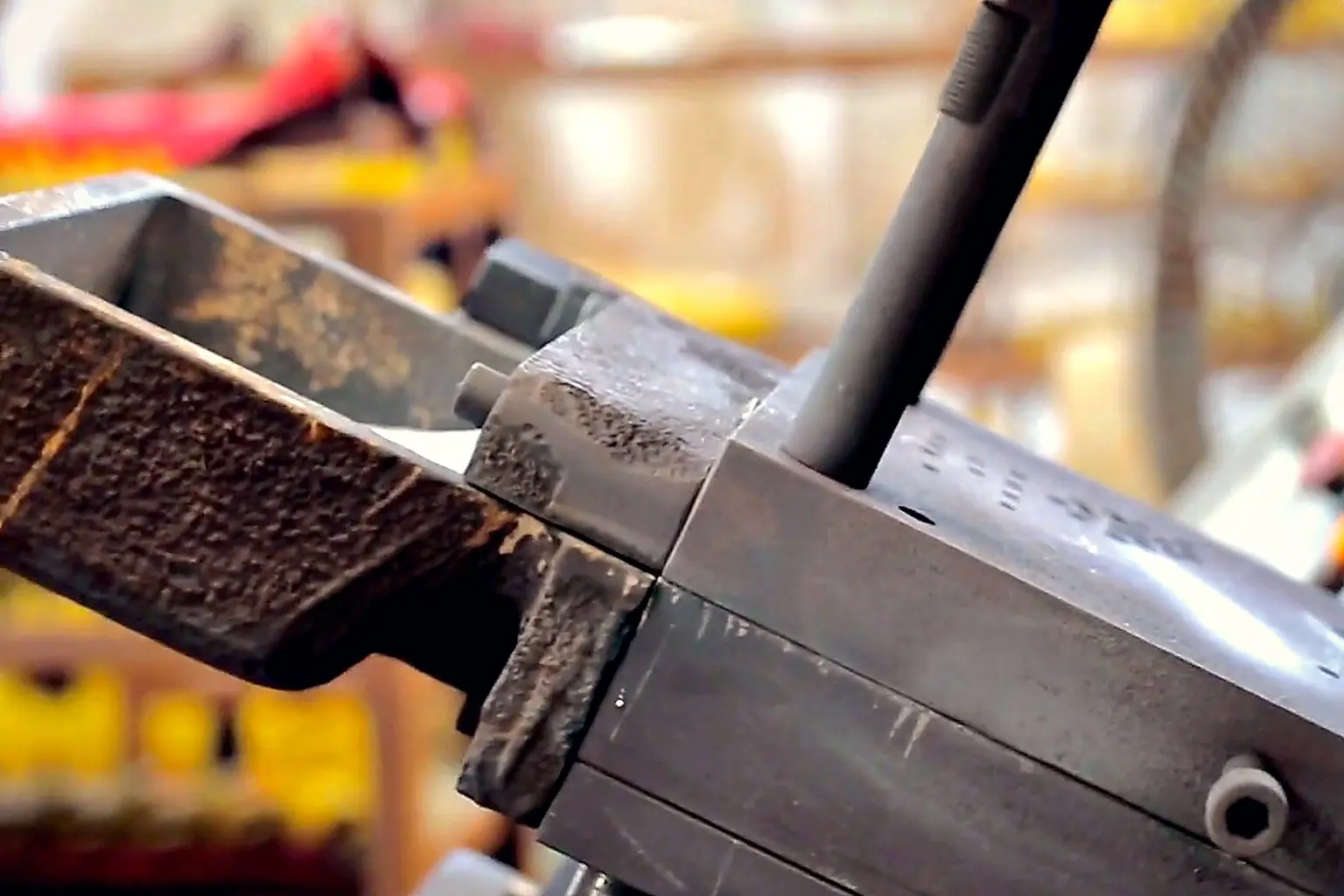
At Bohua
Both the vacuum hydrogen check and the spectrometric analysis must pass before a melt may be poured.
For hardness evidence after alloy and temper selection, Bohua has an HBE-3000A and a digital Brinell hardness tester.
Bohua also has fatigue testing capability for a discussion of the part’s required validation.
Provide the required test method, specimen and loading conditions before requesting an evidence package; see how the A356 melt checks support release.
Review Bohua’s gravity casting scope for manufacturing inputs. The intake manifold drawing requirements cover an application where internal passages and machined interfaces affect the review.
Conclusion
Choosing the right aluminum alloy is a decision that ripples through your entire product lifecycle —from manufacturing cost to field reliability.
By matching your performance requirements, production volume, and budget to the right alloy-process combination, you avoid costly mistakes and get parts that perform as designed.
Send the RFQ package with your part drawing, volume, mechanical requirements, and inspection needs.
- Identify whether the part is load-bearing, pressure-related, cosmetic or thermal.
- Show sealing faces, ports and bores machined after casting.
- State the heat treatment and material evidence required for acceptance.
- Say whether alternatives may be proposed and who can approve them.
Use the drawing-based alloy selection RFQ. You can also browse our casting capabilities or learn more about our facility.
Related guides
Send your drawing and material requirements
Include the drawing revision, alloy and temper, annual volume, delivery scope, and acceptance requirements. Submit the RFQ details, then email your drawing for a structured quote review. Send the drawing, target alloy, finishing scope, MOQ, and delivery timing. Bohua will review it like a real sourcing project, not a generic contact request. Our engineering team can recommend the right alloy, process, and design optimizations for your specific requirements.
Send your drawing →